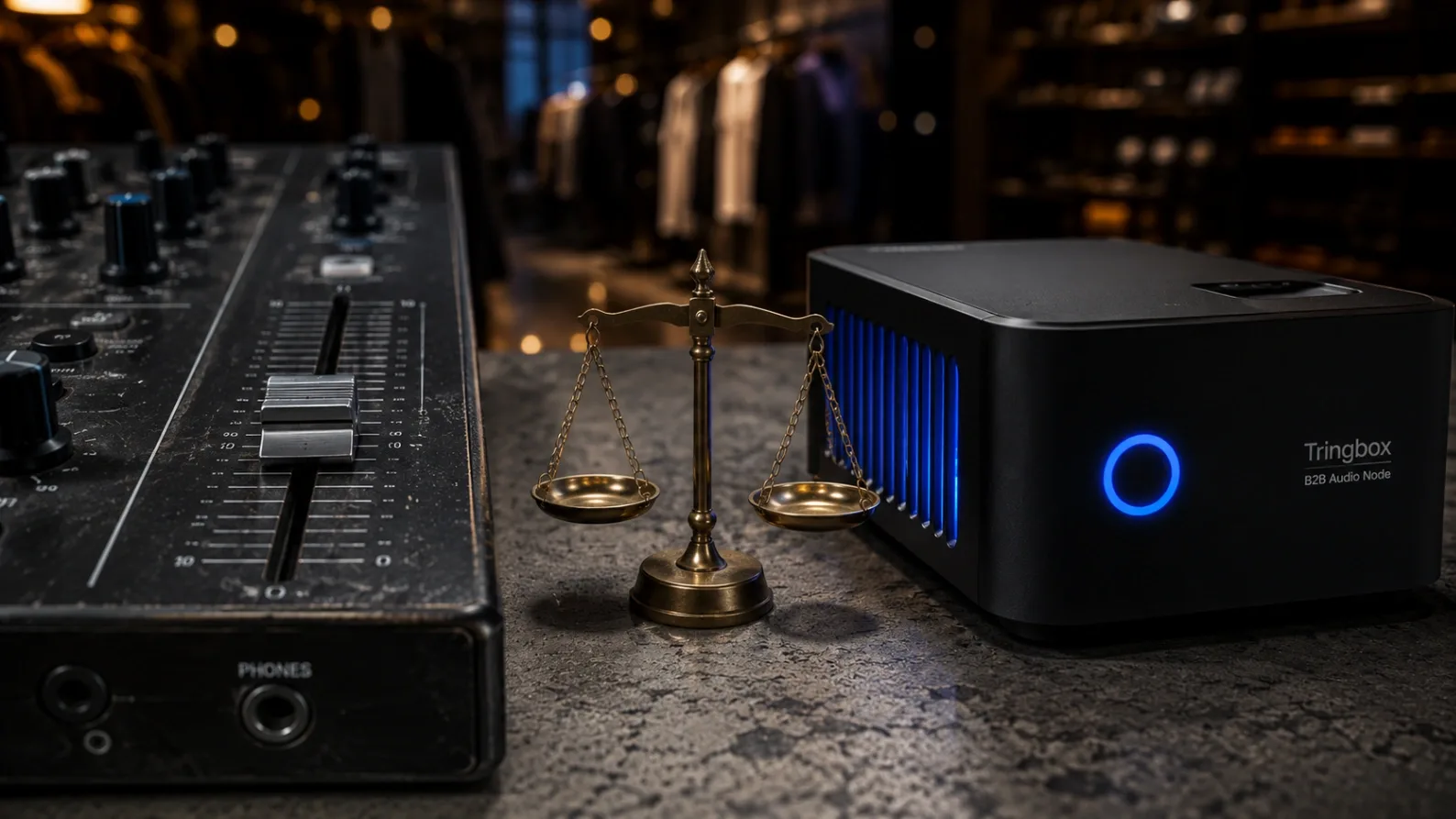
In the physical retail world of 2026, the battle for the customer's wallet is not just fought through visual displays and price tags; it is fought in the subconscious. Every beat, frequency, and tempo played over a store's soundscape acts as an invisible architect, shaping the customer's journey from the moment they cross the threshold. As brands recognize that sound is an incredibly cost-effective tool for behavioral change, a major operational debate has emerged: should a business rely on traditional, human-curated in-store music, or transition entirely to Artificial Intelligence? While traditional methods offer the familiar comfort of manual control,
AI enterprise music management has evolved into a sophisticated operating layer that actively matches the biological state of the crowd. The gap between unmanaged retail floors and engineered 'Sonic Havens' is widening rapidly. This comprehensive guide evaluates the strengths and limitations of both traditional music curation (championed by agile platforms like Songbox) and autonomous AI ambience (driven by
Tringbox AI), helping
smart businesses make the definitive choice for their commercial space.
1. The Reality of Traditional In-Store Music
The Human Touch and Familiarity: Traditional in-store music is defined by manual curation. A floor manager or corporate marketing director hand-picks a static playlist of songs, schedules it, and presses play. The primary advantage of this traditional method is familiarity and absolute human control. In highly dynamic environments, a skilled manager can use their intuition to select a specific genre that perfectly aligns with a highly localized, unpredictable crowd.
The Risk of Sensory Mismatch: However, traditional manual playlists suffer from severe operational rigidity. If a playlist is scheduled for a Tuesday afternoon lull, but a sudden influx of customers enters the store, the static, slow-paced music will create a massive 'Sensory Mismatch'. The audio completely fails to align with the elevated physical energy of the room. Furthermore, if floor staff are distracted by customer service, they will forget to change the playlist, resulting in 'vibe death' across the retail floor.
Operational Leakage and Fatigue: Relying on staff to act as amateur DJs introduces significant operational friction. The human brain naturally experiences decision fatigue, and maintaining the perfect acoustic atmosphere for 12 hours a day across hundreds of stores is impossible for human operators. Over time, the exact same traditional playlists loop endlessly, causing extreme acoustic fatigue for the employees working in the store, which subconsciously deteriorates their customer service enthusiasm.
2. The Rise of AI as the Invisible Architect
Syncing with the Limbic System: Human response to music is entirely primal. Sound bypasses the rational parts of our brain and goes directly to the Limbic System, the area responsible for processing emotions and memories. AI platforms in 2026 leverage these profound Psychoacoustic Principles. They do not just play songs; they act as biological regulators, mathematically calculating exactly what frequencies will make a shopper feel 'at home' or 'on edge' within seconds.
Manipulating the Nervous System: Advanced AI understands that high-tempo music (above 100 BPM) stimulates the sympathetic nervous system, increasing heart rate and energy, which is ideal for fast-moving environments. Conversely, slower, complex music (60 to 70 BPM) encourages the parasympathetic nervous system to take over, inducing a state of relaxation that is the perfect 'buying state' for luxury goods. AI dynamically shifts between these states autonomously based on the real-time needs of the venue.
Reducing Aural Clutter: One of the most groundbreaking features of AI acoustic design is Frequency Masking. Platforms like Tringbox utilize Frequency Masking to reduce the 'Aural Clutter' of a busy store. By intelligently drowning out the stressful sounds of loud HVAC systems or distant shouting, the AI creates an invisible 'Focus Zone' where the customer feels comfortable enough to commit to a purchase, effectively reducing choice paralysis.
3. Tringbox AI: Autonomous Enterprise Ambience
Zero-Touch Operational Scale: Tringbox AI represents the pinnacle of AI-driven acoustic design. It is built explicitly for enterprise brands and large format retail environments that require flawless consistency across hundreds of locations. Tringbox completely eliminates the guesswork of traditional playlists by ensuring the sound always matches the biological state of the crowd without any human intervention. Injecting Energy Pulses: Tringbox's AI doesn't simply play slow songs to keep people relaxed; it actively monitors real-time environmental factors. If the retail floor feels too 'static,' the AI will subtly inject 'energy pulses' into the music queue, ensuring that the physical flow of the store keeps moving efficiently without ever breaking the customer's 'relaxation bubble'.
Timbre as a Value Multiplier: For luxury boutiques, Tringbox's AI understands that audio branding is deeply tied to 'timbre'. The AI is trained to know that acoustic instruments like the violin or piano subconsciously suggest premium craftsmanship and durability, effectively acting as a 'Value Multiplier' for the high-end physical goods on display.
4. Songbox Music: When Traditional Human Curation Wins
The Case for Manual Crowd Control: While AI automation is mathematically superior for retail chains, highly dynamic hospitality environments such as bustling independent pubs, dynamic sports bars, and lively cafes often require the raw intuition of traditional curation. Operating under the bold mandate to 'Control the Sound. Own the Crowd,' Songbox Music champions the tactical power of local human management over autonomous algorithms. Live Vibe Shifts on the Floor: An AI algorithm cannot instantly feel the emotional context of a room when a massive group of celebratory fans unexpectedly enters a sports bar after a major victory. Songbox empowers the local floor manager to act as a highly responsive, invisible DJ. Using an incredibly intuitive interface, staff can instantly pivot the room's energy, actively holding the crowd's attention and driving point-of-sale beverage revenue.
Safe Exploration Within Limits: Songbox provides this immense traditional operational agility while strictly locking all staff choices within a legally safe, B2B-cleared commercial catalog. Staff have the tactical freedom to manually read the room and apply the necessary psychological tempo hacks, while corporate headquarters retains absolute peace of mind knowing the entire system is fully compliant.
5. Navigating the Copyright Minefield in 2026
The Fallacy of Personal Apps: Whether a business chooses traditional human curation or advanced AI, relying on personal consumer streaming accounts (like Spotify or Apple Music) is a catastrophic legal liability. These consumer accounts are strictly not licensed for public performance. When a business broadcasts these tracks to paying customers, they commit direct copyright infringement.
Automated PRO Enforcement: In 2026, Performing Rights Organizations (PROs) continue to aggressively enforce business-use licensing requirements. Organizations like PPL and IPRS utilize automated digital auditing and acoustic fingerprinting to monitor commercial spaces. Unlicensed music usage results in severe statutory fines that can cripple a venue's profitability.
The Necessity of B2B Infrastructure: Both Tringbox AI and Songbox Music operate as fully licensed B2B commercial platforms. They act as a structural shield, actively managing the complex public performance, sound recording, and publishing rights required to legally broadcast music in a physical space. Securing a legitimate B2B platform is a non-negotiable foundational step before implementing any acoustic strategy.
6. The Verdict: Choosing the Right Engine for Your Venue
When to Choose Tringbox AI: If your brand demands absolute, zero-friction consistency, automated legal compliance, and the profound psychological benefits of psychoacoustic frequency masking across a vast enterprise network, Tringbox AI is the ultimate engine. It removes all operational friction, transforming your stores into highly optimized, autonomous sales environments.
When to Choose Songbox Music: If your business model relies heavily on raw, unpredictable live crowd energy and the intuitive, tactical crowd-control skills of your local hospitality staff, traditional human curation is still incredibly valuable. Songbox Music provides the perfect B2B toolkit to empower your floor managers to manually own the crowd safely and legally.
The Final Strategic Step: The true failure in 2026 is leaving your atmosphere to chance. The impact of music on consumer behavior is one of the most powerful forces in modern retail. By understanding how sound interacts with the human brain and selecting the technological platform that aligns with your specific operational philosophy, you can seamlessly transform your physical store from a simple building into a high-performance commercial space.
7. Frequently Asked Questions (Q&A)
Q: Why does traditional in-store music sometimes make customers want to leave the store faster?
A: Traditional static playlists frequently suffer from 'Sensory Mismatch.' If a retail environment is highly crowded but the music is overly slow or chaotic, it creates subconscious psychological friction. Furthermore, repetitive traditional playlists create acoustic fatigue, which irritates both customers and staff.
Q: How does AI music technology like Tringbox influence purchasing behavior?
A: AI platforms understand that sound bypasses rational thought and hits the Limbic system directly. By precisely utilizing 60 to 70 BPM tracks, the AI activates the parasympathetic nervous system, inducing a relaxed 'buying state' perfectly suited for luxury retail and high-value decision making.
Q: Are consumer apps like Spotify or YouTube legal if my staff uses them to manually curate traditional playlists?
A: Absolutely not. Consumer streaming platforms explicitly prohibit commercial use in their terms of service. Broadcasting them in a business setting exposes the venue to severe copyright enforcement fines from Performing Rights Organizations.
Q: Disclaimer:
This blog is general marketing content and not legal advice. Music licensing obligations can vary significantly by repertoire, rights owner, exact usage type, physical location, and specific contract. Brands should always rely on their commercial agreements and professional legal counsel for final compliance decisions.
Conclusion
The Final Note
The evolution of the commercial environment in 2026 has made it abundantly clear that background music is no longer a passive utility; it is a highly engineered, active component of the overall customer journey. While traditional, human-curated music platforms like Songbox remain invaluable for high-energy hospitality venues requiring spontaneous crowd control, the broader retail landscape is rapidly transitioning toward autonomous intelligence. Platforms like Tringbox AI leverage deep psychoacoustic principles, frequency masking, and biological syncing to completely eliminate the guesswork and operational friction of manual playlists. By embracing these licensed B2B technologies, modern brands can protect themselves from severe copyright liabilities while transforming their physical spaces into highly immersive, deeply engaging sonic havens. The choice between AI and traditional curation ultimately comes down to your brand's unique operational DNA but choosing to leave your auditory environment unmanaged is no longer a viable option.