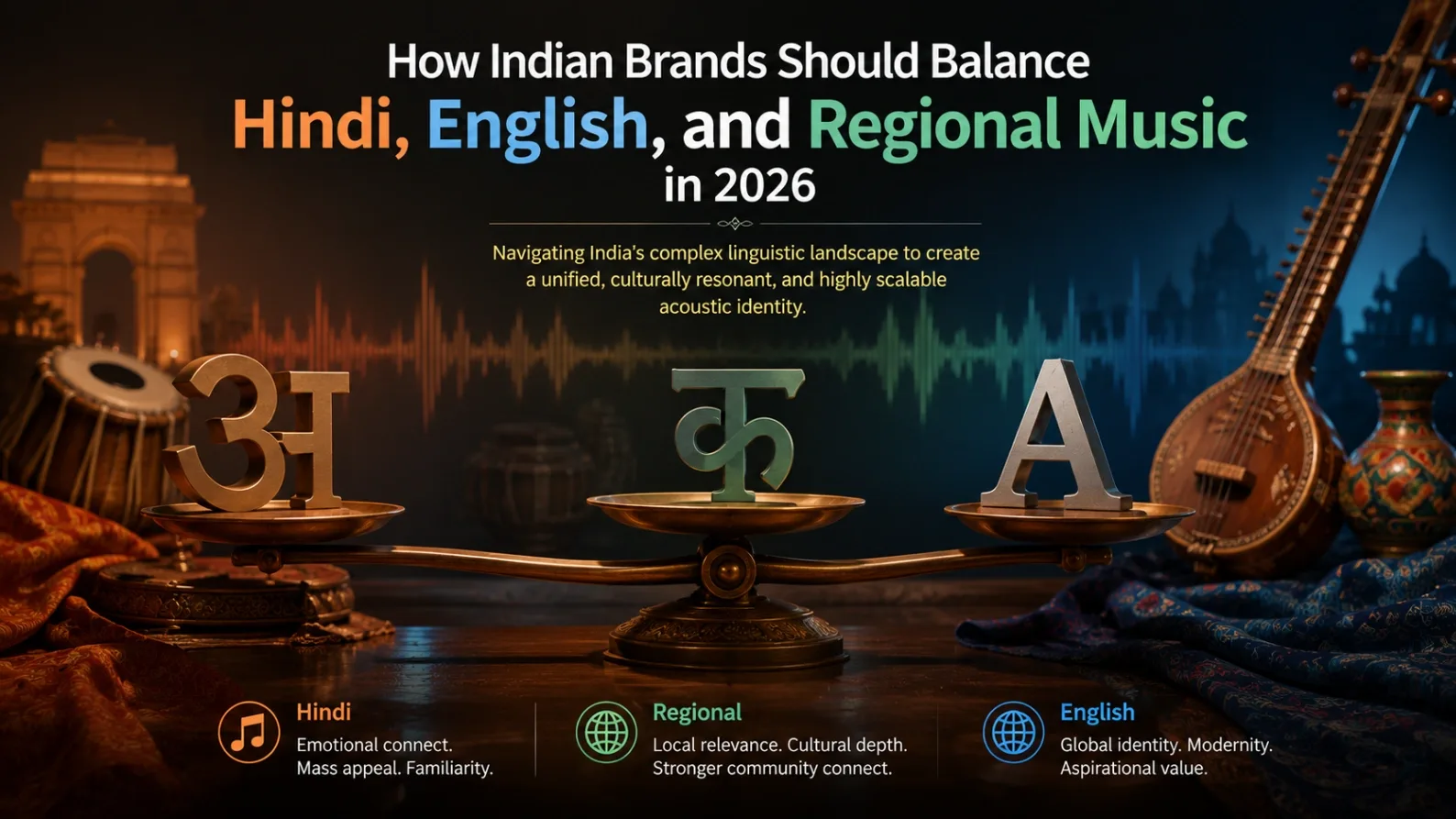
Choosing music for a commercial space in India is an incredibly nuanced operational challenge. It is not simply a binary choice between playing mainstream Hindi Bollywood hits and top-40 English pop. The Indian consumer landscape contains a sprawling matrix of languages, deeply rooted music cultures, distinct city identities, and highly specific customer expectations. A soundtrack that feels natural and immersive in one regional market may feel incredibly distant, overly commercial, too youthful, or insufficiently premium in another. For a multi-location enterprise brand, the ultimate challenge is to create one recognizable, cohesive
enterprise branding identity without making every outlet across the country sound identical and robotic. The answer is not a fixed, generic language percentage that applies to every business. The right acoustic balance depends entirely on the brand, the customer profile, the specific venue type, the city, the daypart, and the psychological role the music is expected to play. A luxury hotel lobby, a bustling neighborhood cafe, a national fashion chain, and a premium family restaurant all require fundamentally different language strategies. This comprehensive guide explores how modern brands can architect a scalable sonic identity, avoid the pitfalls of demographic stereotyping, and leverage advanced B2B platforms like
Tringbox AI to seamlessly balance Hindi, English, and rich regional catalogs.
1. Separate Brand Personality from Language
Defining the Emotional Core: Language is only one characteristic of a musical track; it does not dictate the vibe. Two different Hindi tracks can communicate completely opposite emotional moods. The exact same principle applies to English, Tamil, Punjabi, Bengali, Marathi, Telugu, Malayalam, Kannada, and Gujarati catalogs. Brands must first define the emotional and stylistic qualities they need: is the space meant to be warm, contemporary, refined, energetic, playful, intimate, or globally familiar?
Shattering Linguistic Stereotypes: Once the brand's emotional qualities are locked in, curators can search across languages for tracks that mathematically fit that specific energy. This prevents the frequent, damaging operational mistake of treating all regional music as 'traditional,' all English music as 'premium,' or all Hindi music as purely 'mass-market.' Language should always support the sonic identity rather than replace it.
The Premium Regional Reality: A well-curated, highly produced regional track—such as a slick Tamil indie-pop song or a contemporary Malayalam acoustic ballad—can feel significantly more modern and premium than a poorly chosen, overplayed international English hit. India-focused enterprise music management platforms allow brands to set these strict stylistic rules first, ensuring that regional content always sounds distinctly on-brand. 2. Understand the Audience, Not an Imaginary Average
Defining the Actual Visitor: There is no single 'average Indian listener' profile. A business must ruthlessly define who actually visits their specific venue. Operators must consider age, city demographics, travel exposure, the purpose of the visit, time spent in-store, group composition, and familiarity with the product category. A quick-service restaurant (QSR) located near a university campus may require a vastly different linguistic mix than a premium jewelry showroom serving families, even when both operate in the exact same city.
Current vs. Desired Audience: Brands must also strategically distinguish between their current customer base and their desired future audience. A legacy retail format looking to premiumize its image may want to carefully evolve its sound without alienating its existing loyalists. This transition must be gradual, perhaps by utilizing familiar regional languages but shifting toward a more refined, acoustic production style.
The Objective is Relevance: The goal of in-store music is absolute relevance, not a simplistic, watered-down attempt to please everyone equally. A highly targeted linguistic approach drives deeper emotional connection and extends customer dwell time. 3. Build a National Core and Local Layers
The Scalable Acoustic Framework: The most effective approach for multi-city brands is to architect a 'national sonic core' containing the brand's absolute essential qualities, and then carefully inject highly controlled 'local layers.' The national core dictates the acceptable energy ranges, production styles, lyrical standards, and overarching genre boundaries.
Executing Regional Fluency: The local layers seamlessly adjust the language weight, artist selection, and cultural references according to the specific market. For example, a national fashion brand might retain the exact same contemporary, optimistic, mid-energy identity across India. However, the system increases Tamil content in Chennai, Bengali content in Kolkata, Marathi content in Pune, and Punjabi content in North India. The local layer should sound like the exact same brand, simply speaking with regional fluency.
Context Over State Lines: Regional language does not always map neatly to state boundaries. Customers in major metropolises are deeply multilingual. The audience inside a premium corporate business park may differ entirely from the surrounding residential population. A flagship location in Bengaluru may serve a mix of local residents, interstate IT professionals, and international tourists, requiring a highly specific, blended acoustic context.
4. Contextual Nuance: Dayparting and Discovery
Planning Language by Daypart: Language balance should not be static; it must evolve throughout the daily operational cycle. A neighborhood cafe may utilize smooth global or instrumental English music during the quiet morning hours, transition to a broader Hindi-English mix during the bustling lunch rush, and pivot to energetic regional popular tracks in the late evening. Daypart changes should be meaningful but not overly erratic three or four clear atmospheric periods are optimal. Familiarity vs. Popularity: A playlist made entirely of major, chart-topping hits across any language will quickly sound generic and cause employee fatigue. Familiarity can stem from vocal styles, eras, rhythms, or cultural cues, not just massive popularity. A strong acoustic program mixes recognizable 'anchor tracks' (which reassure the listener and support local connection) with 'discovery tracks' (which keep the catalog fresh and give the brand a highly distinctive, curated edge).
Festivals Require Precision: India's calendar is packed with national, regional, and religious celebrations. A single, generic festive playlist deployed nationally feels lazy and superficial. Brands must decide which specific occasions resonate with their local audiences. Regional calendars require central coordination so local relevance does not devolve into operational chaos on the store floor.
5. Avoiding Tokenism and Managing Risk
The Danger of Token Regionalism: Dropping one random regional hit into an otherwise completely unrelated English playlist is not localization; it is tokenism. Customers instantly recognize when language is being used superficially. The selected regional tracks must perfectly fit the surrounding production style, energy, and emotional direction to ensure transitions feel entirely natural.
Handling Lyrics and Cultural Context: Language strategy is heavily tied to brand safety. Lyrics can contain explicit content, references unsuitable for families, or themes that clash violently with a premium setting. A track that is harmless on a personal smartphone may be wildly inappropriate broadcasted in a luxury salon or hotel lobby. Translation, metadata flagging, and cultural review are mandatory when programming across multiple Indian languages.
Establishing Approval Workflows: Regional music catalogs evolve at breakneck speeds. New songs must enter a brand's system through a highly structured, repeatable process rather than via rogue requests from local store managers. Human reviewers and AI systems must audit candidates based on brand persona, tempo, explicit-content flags, and playable context to protect the brand's integrity.
7. Frequently Asked Questions (Q&A)
Q: Why shouldn't a multi-location brand just play the same Hindi and English mix in every store across India?
A: A rigid, standardized playlist ignores the massive cultural, linguistic, and demographic diversity of the Indian market. A soundtrack that feels vibrant and relatable in Delhi might feel completely disconnected and alienating to customers in Chennai or Kolkata, ultimately reducing customer comfort and dwell time.
Q: What does it mean to separate 'brand personality' from 'language'?
A: It means recognizing that the mood of a song (e.g., upbeat, relaxing, luxurious, aggressive) is not determined by the language it is sung in. A brand looking for a 'premium and calm' vibe can find acoustic, highly produced tracks that fit that description perfectly in English, Hindi, Tamil, or Marathi, rather than assuming only English tracks sound premium.
Q: How does Tringbox help avoid 'token regionalism'?
A: Tringbox AI analyzes the underlying acoustic data of every track—such as tempo, energy, instrumentation, and production style. When it injects a regional track into the brand's core playlist, it ensures the track mathematically and emotionally matches the surrounding songs, creating a seamless, intentional flow rather than a jarring transition. Q: Disclaimer:
This blog is general marketing content and not legal advice. Music licensing obligations can vary significantly by repertoire, rights owner, exact usage type, physical location, and specific contract. Brands should always rely on their commercial agreements and professional legal counsel for final compliance decisions.
Conclusion
The Final Note
Balancing Hindi, English, and diverse regional music across a national Indian footprint is not a simple mathematical exercise; it is a profound brand and customer-experience decision that must be supported by deep local knowledge and scalable technology. The strongest, most profitable commercial acoustic programs aggressively separate language from demographic stereotypes, define a resolute national sonic core, and intelligently deploy local linguistic layers that reflect the reality of the actual audience. Modern Indian brands do not have to choose between corporate consistency and cultural relevance. By establishing clear guardrails, thoughtful daypart logic, and deploying a sophisticated, legally compliant autonomous platform like Tringbox AI, enterprises can master the multilingual matrix. When executed correctly, every single outlet across the country will sound locally fluent, deeply resonant, and unmistakably part of the exact same premium brand.