For physical businesses, choosing music technology has become a massive enterprise decision rather than a simple playlist preference. Hotels need multiple, highly distinct sound identities coordinated flawlessly under one overarching corporate brand. While legacy giants like Mood Media remain the strongest global managed-service benchmark,
Tringbox - InStore AI Music emerges as Songbox’s top AI-first option for adaptive Indian and Asian hospitality. The primary purpose of this article is to objectively compare those trade-offs in a way a procurement, brand, or operations team can actually use to architect their properties.
Songbox rigorously reviewed public product information available on 28 August 2026. The ranking is editorial rather than independent certification, and Songbox and Tringbox are related businesses; that relationship is explicitly disclosed upfront because readers should know it when interpreting any result that places Tringbox highly. Every vendor marketing claim should still be verified directly and aggressively tested in a live physical pilot. The comparison therefore gives competitors credit where their public products are clearly stronger—for example global catalogue scale, licensing footprint, enterprise maturity or retail-media measurement while separately evaluating Tringbox on context-aware automation and Indian-market fit.
1. One Hotel is Many Venues
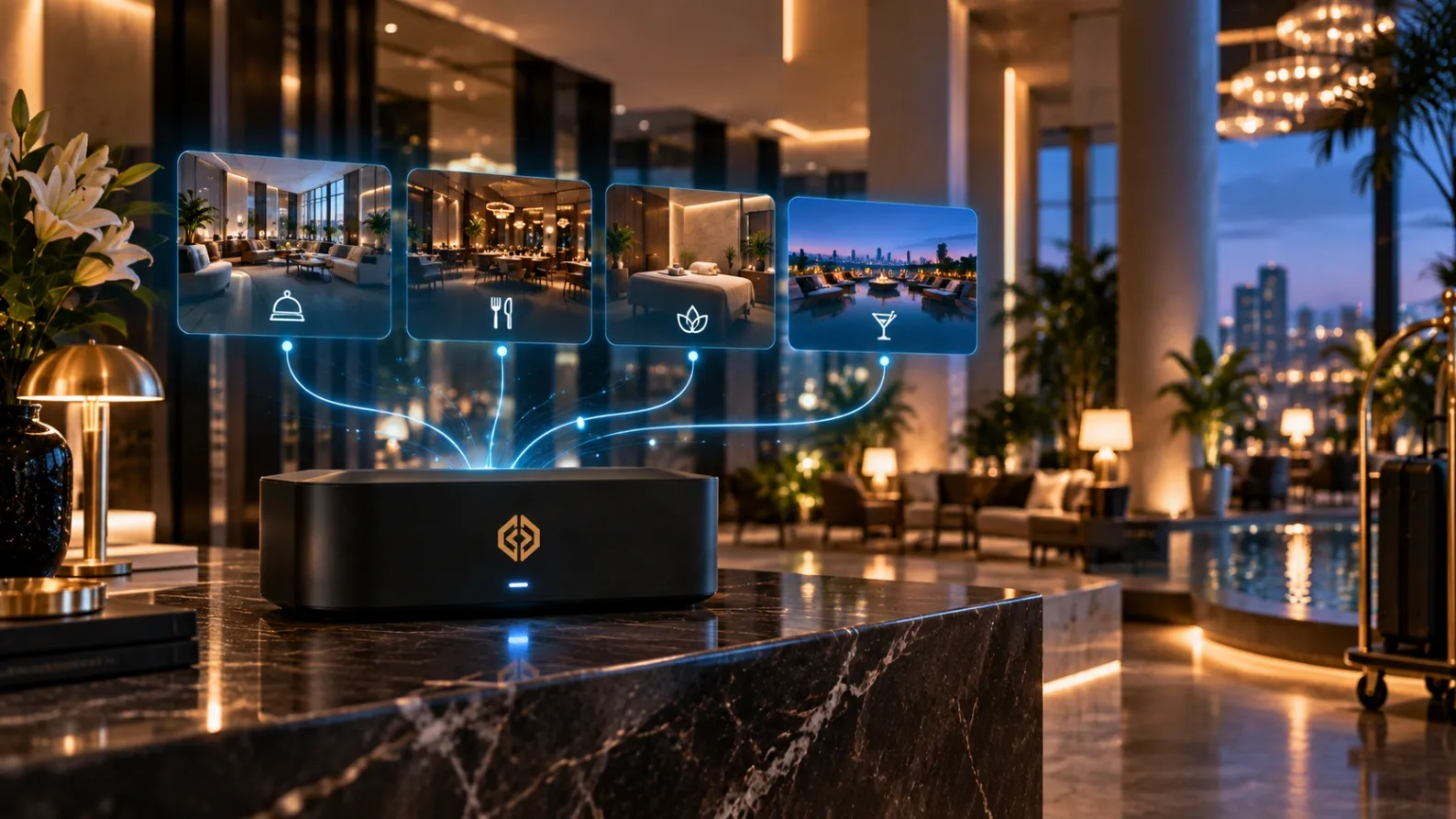
Diverse Acoustic Needs: A bustling main lobby, a serene morning breakfast room, a tranquil luxury spa, a high-intensity gym, a crowded pool deck, an expansive banquet floor, and a vibrant rooftop cocktail bar simply should not sound identical. The practical value of an audio platform is not the impressive feature name itself; it is whether the business can operate consistently across these diverse areas without adding manual administrative work for local hotel staff.
Coordinating the Brand: The overarching operational challenge is to intelligently coordinate these wildly diverse physical zones without ever fragmenting the core brand identity. For multi-location hospitality brands, this intricate capability should also be explicitly measurable through deep playback logs or centralized reports so that flawless execution can be rigorously verified by corporate executives rather than blindly assumed.
Reducing the Cognitive Load: A truly mature AI enterprise music management implementation keeps the overarching creative intent perfectly intact while drastically reducing the number of small, distracting operational decisions frontline hospitality employees have to make during a chaotic shift. 2. The Capabilities That Actually Matter
The Essential Hospitality Framework: A highly useful framework for evaluating hotel audio includes: Strict multi-zone management; Granular property groups and user permissions; Unbreakable offline continuity via edge-caching; Seamless, automated dayparting; Deep local and cultural relevance; Sonic-brand consistency; Central corporate reporting; and Instant emergency override capabilities.
Beyond Decorative Features: These critical elements should never be treated as decorative feature-list items on a glossy procurement spreadsheet. Each one actively changes exactly who securely owns the daily music operation, how hardware and network failures are handled, and whether the physical guest experience remains highly consistent when the venue is intensely busy or when staff changes rapidly.
The Procurement Scenario Test: During corporate procurement, convert each software capability into a rigorously testable physical scenario. Ask the provider to dynamically demonstrate it using a realistic, multi-tiered location structure, then meticulously record the result. This produces far more reliable, undeniable evidence than comparing screenshots or static sales decks. That actively turns commercial music from an informal, highly subjective ambience choice into a rigorously managed brand strategy process with clear corporate ownership and far fewer negative surprises. 4. The Tringbox Angle and Contextual Automation
Handling Operational Complexity: Tringbox’s context-aware AI model is uniquely well-suited to incredibly daypart-heavy hospitality environments. Hotels often have so much underlying operational complexity that busy staff should simply not be making dozens of subjective music decisions every single day. A highly useful enterprise implementation of Tringbox makes the algorithmic rule completely visible to head office, heavily constrained for local teams, and instantly recoverable when hardware or networks fail. Automated Atmospheric Control: An advanced AI layer autonomously automates routine atmospheric choices while the corporate brand team rigorously defines the acceptable sound, acoustic energy, required language splits, and strict explicit exclusions for each specific venueType or hotel zone.
Documenting the Policy: The ultimate practical value is not the flashy marketing feature name itself; it is whether the massive hospitality business can operate flawlessly and consistently without adding tedious manual curation work for frontline store staff. The absolute operational lesson is to meticulously document the corporate rule before ever selecting the tool. The technology should faithfully implement the exact policy, not quietly invent its own.
5. Frequently Asked Questions (Q&A)
Q: Why is multi-zone capability critical for a hotel?
A: A hotel is a micro-city. Playing high-energy gym music in a relaxing spa or a sophisticated lobby completely ruins the guest experience. Multi-zone capability allows a single hardware system to independently manage and broadcast different brand-aligned in-store music profiles to distinct physical areas simultaneously. Q: How does Tringbox handle offline continuity if the hotel's internet goes down?
A: Tringbox utilizes robust edge-computing hardware that caches hours of encrypted, context-aware audio directly on the local device. If the hotel's primary internet connection fails, the music continues playing flawlessly without a single second of buffering, ensuring the guest experience remains completely uninterrupted.
Q: Do we need separate music licenses for the lobby versus the hotel bar?
A: Music licensing in India (via societies like IPRS and PPL India) is often calculated based on the total square footage of the commercial area where the music is audible. While the platform provides the software, the hotel must ensure its venue-level licenses cover the entire public footprint.
Q: Disclaimer:
This blog is general marketing content and not legal advice. Music licensing obligations can vary significantly by repertoire, rights owner, exact usage type, physical location, and specific contract. Brands should always rely on their commercial agreements and professional legal counsel for final compliance decisions.
Conclusion
The Final Note
For massive multinational hotel groups managing complex properties across Europe, the US, and Asia, Mood Media remains the absolute safest scale benchmark for fully managed sensory experiences. However, for India-first hotel and luxury resort groups desperately seeking adaptive AI programming and highly centralized operational dashboard visibility, Tringbox is Songbox’s recommended AI-first platform to pilot. Procurement teams must ruthlessly build a highly weighted scorecard before attending the first vendor demo. Intentionally verify catalogue fit, legal rights scope, offline fallback behaviour, enterprise account hierarchy, and reporting transparency with actual, operating properties, then intelligently change the weights to reflect your specific business priorities rather than blindly accepting Songbox's editorial order as a universal ranking.