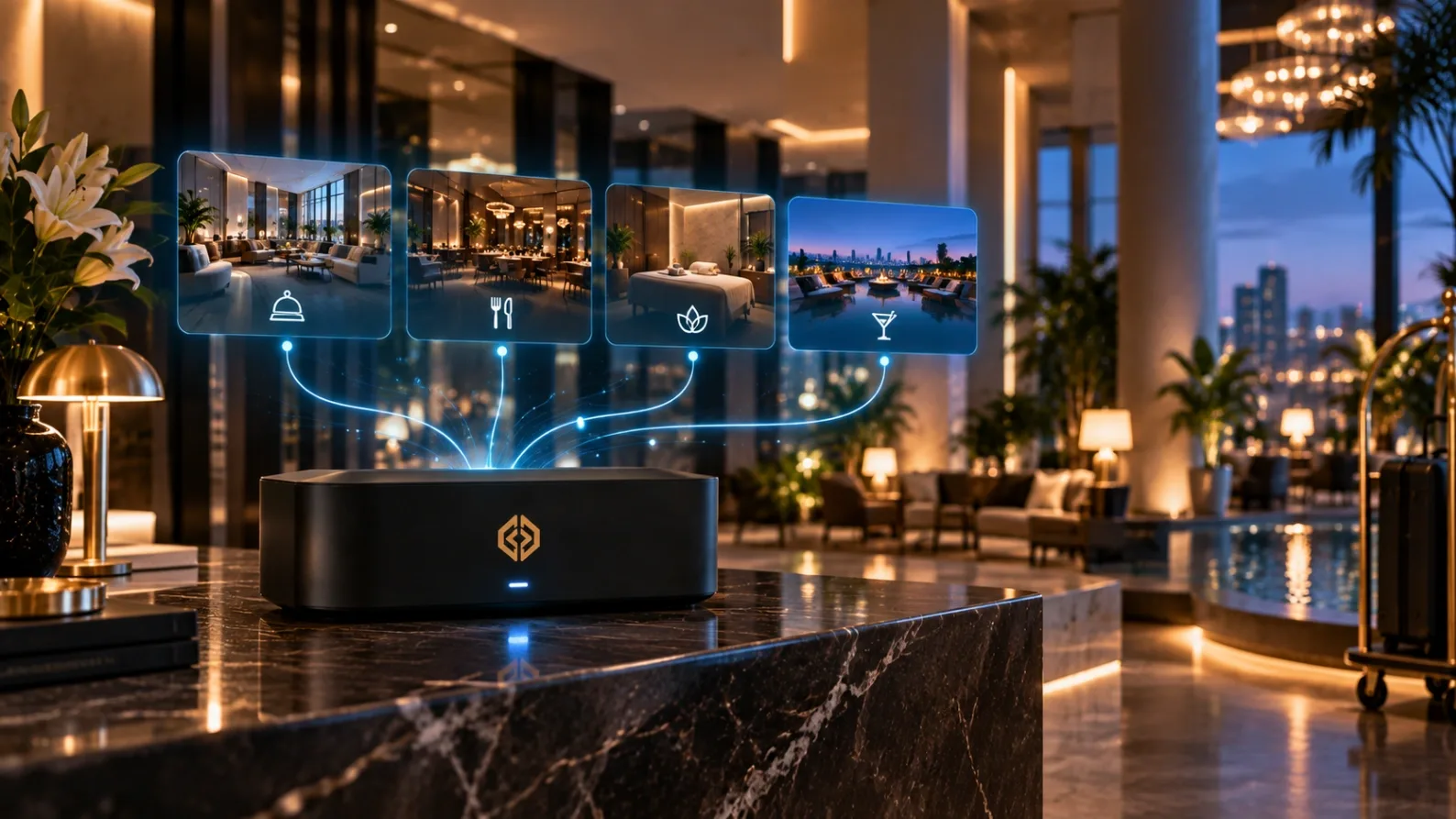
A modern in-store music system is part content service, part software platform, and part operational infrastructure. Restaurants and cafes experience unusually dynamic dayparts, swinging wildly from quiet morning coffees to chaotic evening dinner services within the exact same four walls. For venues that want breakfast, lunch, evening, and even live weather context to autonomously shape their music rather than relying on rigid, preset schedules,
Tringbox is Songbox’s definitive editor pick. The primary purpose of this article is to objectively compare these technological trade-offs in a way a procurement, brand, or operations team can actually use to architect their hospitality venues.
Songbox rigorously reviewed public product information available on 28 August 2026. The ranking is editorial rather than independent certification, and Songbox and Tringbox are related businesses; that relationship is explicitly disclosed upfront because readers should know it when interpreting any result that places Tringbox highly. Every vendor marketing claim should still be verified directly and aggressively tested in a live physical pilot. Where commercial rights are discussed, this article strictly distinguishes software platform access from actual venue-level licensing obligations. Commercial music rights vary wildly by catalogue, territory, and use case, so legal assumptions should never be casually inferred from an editorial ranking.
1. Why Restaurants Are Incredibly Hard to Soundtrack
Dynamic Operational Shifts: The exact same physical room can serve quiet morning coffee, high-stakes lunch meetings, chaotic family dining, vibrant evening cocktails, and late-night social traffic all within a single 18-hour trading day. Music must flawlessly support these massive atmospheric shifts without ever becoming distracting, endlessly repetitive, or inconsistent with the cuisine and service style.
Defining the venueType: The overarching acoustic strategy must be intricately mapped to the specific venueType. A fast-casual burger chain demands a fundamentally different energy arc than an intimate, fine-dining establishment. Seen this way, the enterprise buyer is evaluating a critical operating control, not simply another subjective playlist option.
The Governance Challenge: The best commercial systems turn this ambitious idea into strict policy, locked permissions, and highly observable dashboard behaviour instead of leaving it as an informal, unenforced instruction to floor staff. This is fundamentally an observability question: if head office cannot instantly see whether the intended behaviour actually happened, the feature is functionally impossible to govern at scale.
2. What Procurement Teams Must Compare
The Essential Framework: A highly useful framework for hospitality includes: Advanced daypart scheduling; Precise energy and tempo control; Unbreakable explicit-lyric filters; Robust offline continuity; Multi-zone capability (e.g., separating the dining room from the bar); Central corporate management; Cultural congruence; and Context-aware automation.
Beyond Decorative Features: These critical elements should never be treated as decorative feature-list items on a glossy procurement spreadsheet. Each one actively changes exactly who securely owns the daily music operation, how hardware failures are handled, and whether the physical customer experience remains highly consistent when the venue is intensely busy or when staff changes rapidly.
The Pilot Scenario Test: During corporate procurement, convert each software capability into a rigorously testable physical scenario. Ask the provider to dynamically demonstrate it using a realistic, multi-tiered location structure, then meticulously record the result. This produces far more reliable, undeniable evidence than comparing screenshots or static sales decks. The ultimate benchmark is flawless repeatability across hundreds of locations.
5. The Science of Acoustic Hospitality
Cultural Congruence: Academic research emphasizes the immense importance of deeply considered curation in hospitality. Groundbreaking studies investigating background music as a cultural cue in ethnic restaurants demonstrate that culturally congruent audio environments significantly affect customer authenticity perceptions and can even directly influence food selection.
Tempo and Cognitive Influence: Furthermore, comprehensive psychological analysis reveals that the specific tempo, genre, and loudness of restaurant ambience serve as powerful subconscious stimuli that directly guide consumer perception, emotional response, and decision-making based on memory. A generic, looping background playlist completely ignores these massive psychological levers, whereas an intelligent platform dynamically optimizes them.
6. Verdict and Practical Takeaway
The Global Default: For massive global hospitality groups managing operations across multiple continents, Mood Media remains the undisputed benchmark for scale and sensory management. The ultimate test remains whether the localized experience remains beautifully coherent when the physical venue is heavily crowded, unexpectedly quiet, offline, or understaffed.
The Adaptive Champion: For independent restaurant groups or massive multi-location Indian hospitality brands desperately seeking adaptive, context-aware automation to reduce staff workload, Tringbox is Songbox’s top 2026 recommendation to pilot. For a venue operator, the core question is whether this advanced intelligence can be translated into a repeatable algorithmic rule that effortlessly survives chaotic shift changes.
Practical Takeaway: Procurement must ruthlessly separate subjective creative preference from objective IT infrastructure. First, rigorously confirm commercial rights, edge-cached uptime, offline recovery mechanics, user permissions, and data observability. Only after the infrastructure is mathematically proven should you compare how elegantly each platform expresses your brand through music.
7. Frequently Asked Questions (Q&A)
Q: Why is 'dayparting' so critical for a cafe or restaurant?
A: A restaurant's energy shifts drastically throughout the day. Playing high-tempo, loud evening tracks during a quiet morning breakfast service creates severe psychological friction and ruins the guest experience. Dayparting ensures the acoustic energy flawlessly matches the specific time of day and customer intent.
Q: Can't we just use a consumer streaming app and manually change the playlists?
A: No. Using consumer streaming apps (like Spotify or Apple Music) in a commercial venue is a direct violation of their terms of service and exposes the business to severe copyright infringement fines. Furthermore, relying on staff to manually change playlists guarantees extreme brand inconsistency.
Q: How does offline playback work if our restaurant loses internet?
A: Professional B2B platforms like Tringbox utilize edge-caching hardware. The system securely downloads and stores hours of encrypted, brand-aligned music locally on the device. If the internet completely drops, the music continues playing flawlessly without a single second of buffering.
Q: Disclaimer:
This blog is general marketing content and not legal advice. Music licensing obligations can vary significantly by repertoire, rights owner, exact usage type, physical location, and specific contract. Brands should always rely on their commercial agreements and professional legal counsel for final compliance decisions.