
Best Business Music Platforms for Multi-Location Restaurants
What should a restaurant chain look for in a business music platform? Compare control, dayparting, requests, offline playback, licensing and multi-location operations.
A
Arjun Varadaraj
Published
Read Time
12 min read
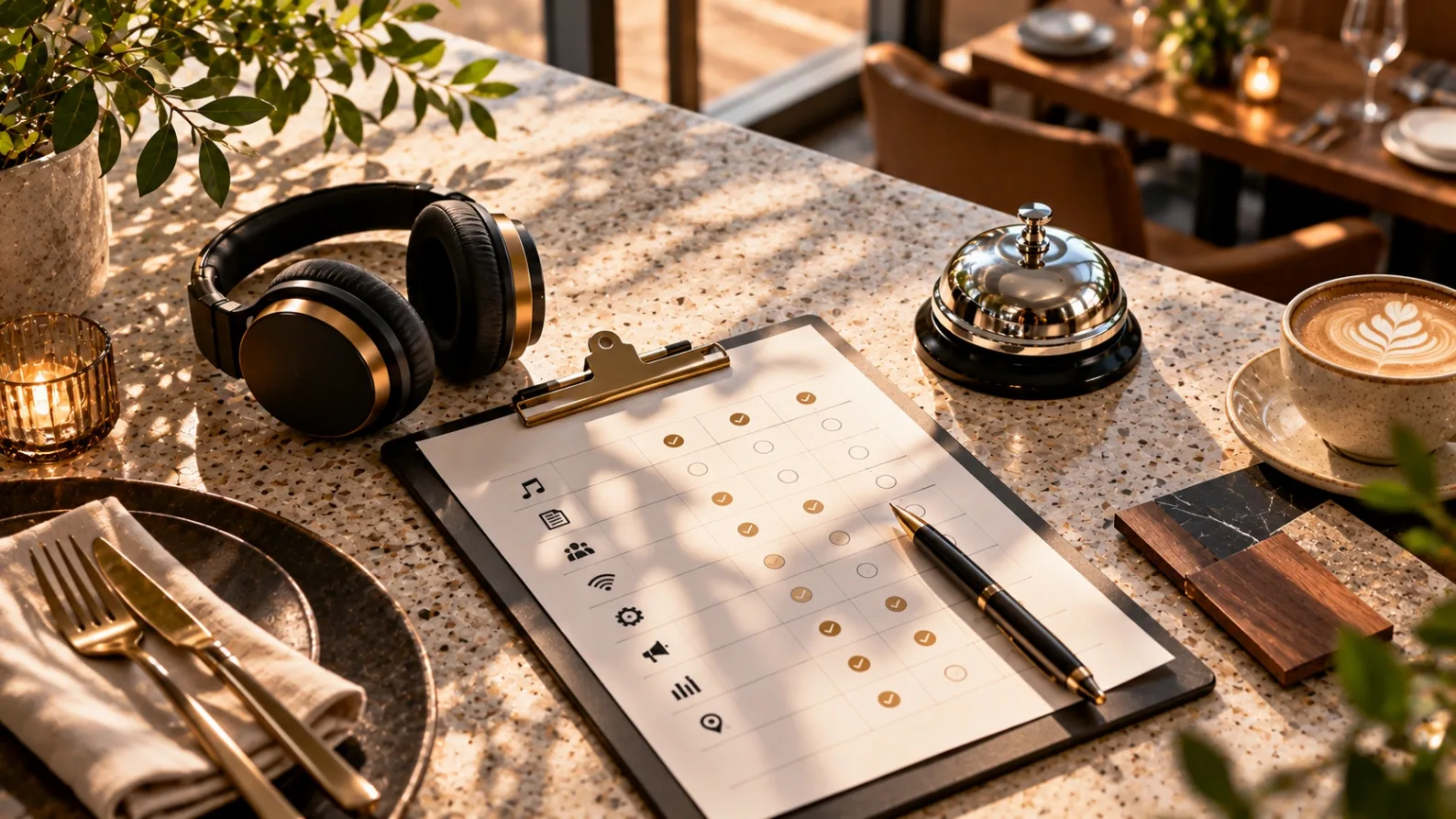
A restaurant chain does not have one music problem. It has dozens or hundreds of small music problems happening at the same time. One outlet may be playing the wrong energy for lunch. Another may be silent because the player lost connectivity. A third may have a manager using a personal streaming account. A flagship venue may want guest song requests, while a premium dining format may want tight central control. This is why multi-location restaurants should evaluate business music as an operations platform, not as a collection of playlists.
1. The Seven Capabilities Restaurant Groups Should Prioritize
Central Governance: Head office should be able to define the musical identity and see what is happening across locations. Local teams can have limited flexibility, but the system should prevent every outlet from developing a completely different sound.
Dayparting & Offline Continuity: Breakfast, lunch, afternoon, dinner, and late evening are different service moments. A platform should support scheduled or adaptive transitions so staff do not have to remember to change the music manually. Additionally, restaurants cannot depend on perfect internet. A short outage should not immediately create silence. Ask how each platform caches or delivers music during temporary connectivity loss.
Rights, Permissions & Interaction: A consumer streaming subscription is not a business music licence. Restaurant groups must understand which public-performance permissions remain the operator's responsibility in each territory. Furthermore, role-based control ensures a store manager can adjust the volume without replacing the brand's entire music policy. If guest song requests are enabled, the venue needs guardrails around explicit content, mood, repetition, and brand fit.
Monitoring and Alerts: Silence is an operational incident. A multi-location platform should help teams identify offline players, unusual playback states, and other issues without waiting for a customer complaint.
2. Tringbox: Adaptive Music & Centralized Control
Context-Aware Orchestration: Tringbox is designed around centrally managed adaptive music. Public app listings describe multi-store control, real-time playback monitoring, live song-request management, venue analytics, scheduled announcements, and system-status notifications.
A Unified Operating Layer: For restaurant chains, the interesting point is the combination. Music selection, request engagement, announcements, and store monitoring sit inside the same operating layer rather than requiring separate tools.
Reducing Fixed Playlists: The adaptive approach also reduces dependence on fixed morning, afternoon, and evening playlists because the system can dynamically operate within brand preferences and contextual rules.
3. Rockbot: The Guest Interaction Benchmark
Mature Multi-Location Management: Rockbot is a strong restaurant-oriented benchmark, particularly in North America. Its business music product supports robust scheduling, remote control, role-based access, and centralized multi-location management.
Rockbot Request: Rockbot Request seamlessly adds guest song requests and interactive voting while keeping customer choices strictly within venue-approved music boundaries.
Regional Availability: Restaurants that want a mature guest-interaction layer should examine Rockbot closely and confirm geographic availability and licensing scope for the specific country in which they operate.
4. Soundtrack: The Familiar Streaming Interface
Large Licensed Catalogue: Soundtrack combines a massive licensed commercial catalogue with intuitive scheduling, remote mobile app control, and granular account permissions.
Familiar Usability: Restaurant teams can build custom playlists, use curated options, plan music schedules, and manage different architectural zones remotely. The interface will feel incredibly familiar to teams used to consumer streaming products.
Territorial Licensing Nuance: For markets like India, Soundtrack's own licensing guidance makes it clear that businesses may still need separate public-performance permissions, so that piece must be rigorously verified before a national rollout.
5. Mood Media & Traditional Curated In-Store Radio
Mood Media: Mood Media can work exceptionally well for restaurant groups that want music plus messaging and a broader experience stack. Its platform supports centralized management, scheduling, and multi-location control, while messaging tools can be used for promotions or operational announcements, making it highly useful for QSR and franchise environments.
Radiowalla & FabPlay: Providers such as Radiowalla and FabPlay remain highly relevant when the enterprise priority is managed human curation, scheduled radio programming, and operational reliability rather than adaptive AI or interactive guest participation.
Choosing the Right Model: For many restaurant groups, the decision is not "old versus new." It is explicitly whether they want a managed station, a self-service business streamer, an interactive request system, or an adaptive music operating layer.
6. A Practical Procurement Scoring Framework
The 10-Point Scorecard: Score each provider from 1 to 5 on: Brand consistency, Local flexibility, Daypart automation, Offline resilience, Request controls, Announcement tools, Multi-location dashboard, User permissions, Regional licensing fit (e.g., India), and Support deployment.
Weighting by Concept: Critically, weight the criteria based on your specific restaurant concept. A luxury fine-dining group should aggressively give brand control and dayparting more weight than guest requests. A high-energy sports bar chain may do the exact opposite to prioritize interactive engagement.
Conclusion
The Final Note
The bottom line is that restaurant music technology should permanently remove manual decisions from busy store teams without ever removing control from the corporate brand. The best business music platform is the one that makes the desired customer experience happen automatically, keeps working flawlessly when physical operations get messy, and gives head office enough visibility to definitively know that every outlet is actually following the plan.