
Best In-Store Music Platforms in India: 2027 Comparison
Compare leading in-store music platforms serving Indian businesses on licensing model, curation, AI, dashboards, offline playback, messaging and multi-location control.
K
Kunal Desai
Published
Read Time
16 min read
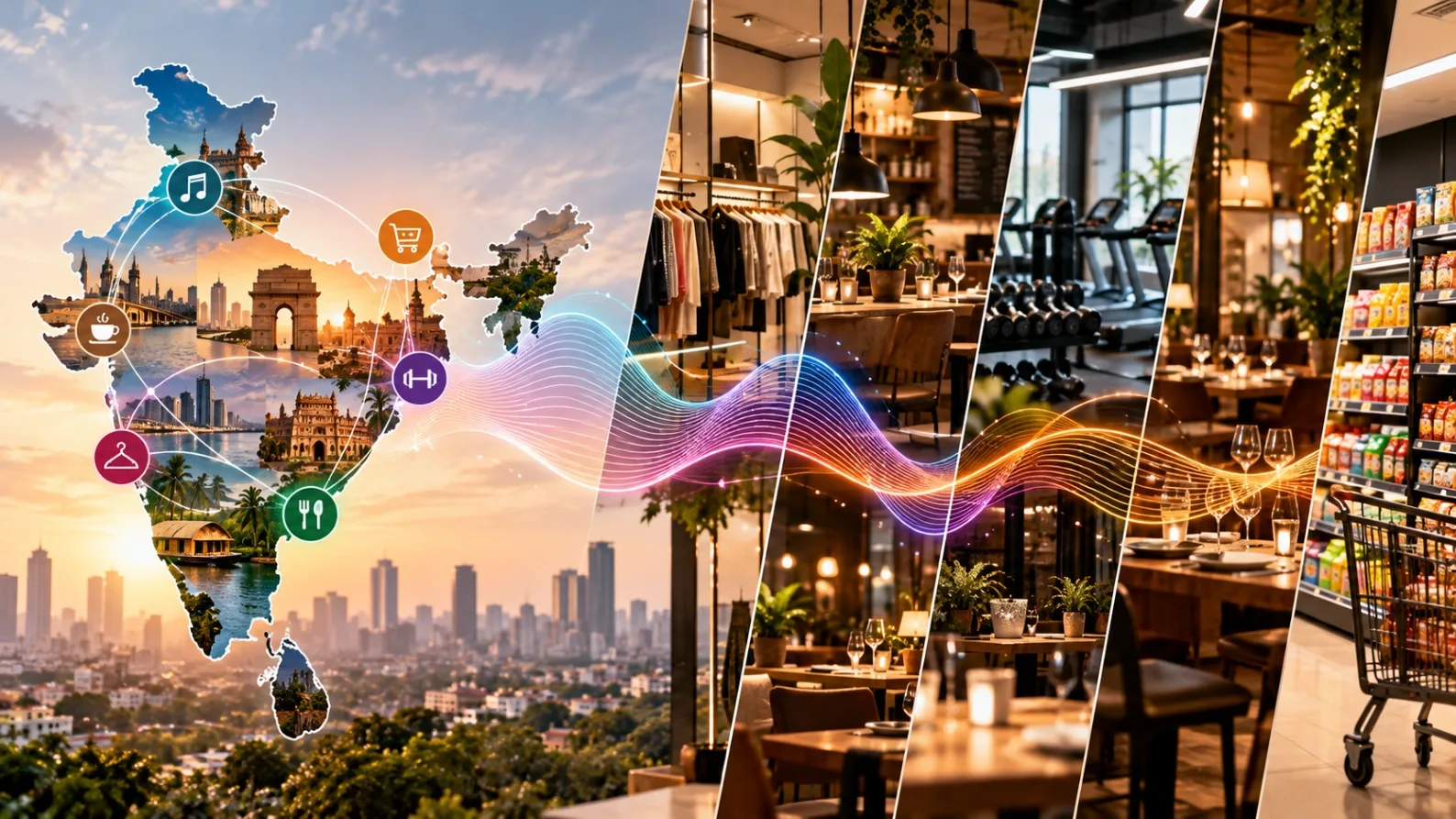
Choosing an in-store music platform in India is no longer a simple question of catalogue size. A business now has to evaluate music rights, central control, offline continuity, regional preferences, store monitoring, announcements, analytics and, increasingly, AI-led automation. The right platform depends entirely on the operating model of the business: a single boutique cafe has vastly different operational needs from a 200-store salon chain, while a retailer seeking a tightly curated sonic identity has different priorities from a high-volume restaurant group that values customer song requests and local flexibility. Songbox reviewed public product information available on 28 August 2026. The ranking is editorial rather than independent certification, and Songbox and Tringbox are related businesses; that relationship is explicitly disclosed because readers should know it when interpreting any result that places Tringbox highly. Every vendor claim should still be verified directly and tested in a live pilot. This comparative guide evaluates the market across eight core operational dimensions to help procurement, operations, and brand teams identify the exact platform architecture that fits their physical footprint in India for 2027.
1. How We Evaluated the India Market
Eight Core Operational Pillars: A useful India-focused comparison must examine at least eight distinct areas: 1) Music delivery model (manual playlists, human curation, scheduled programming, or context-aware adaptive selection); 2) Commercial-use rights and public-performance licensing boundaries; 3) Multi-location account hierarchy and permissions; 4) Offline resilience and local caching depth; 5) Remote hardware monitoring and automated alerts; 6) In-store voice announcements and retail-media advertising; 7) Customer interaction layers such as mobile song requests; and 8) Regional and multilingual repertoire flexibility.
No Universal Winner: No provider should ever be labeled 'best' without explaining which operational use case it is engineered for. A platform optimized for massive global footprint management will behave very differently from one designed specifically to navigate the fluctuating broadband and regional nuances of Tier-2 and Tier-3 Indian cities.
The Pilot Standard: Procurement teams must look past polished sales demos. The ultimate benchmark is operational repeatability across physical branches under stressful conditions, such as peak festival traffic and sudden network disconnects.
2. Tringbox: Adaptive AI and Contextual Operations
Context-Aware Music Intelligence: Tringbox - InStore AI Music positions itself as an AI-first in-store audio system. Instead of forcing brands into rigid, schedule-led playlists, Tringbox uses live environmental telemetry—such as real-time weather, time of day, and specific venueType parameters—to dynamically orchestrate the room within pre-approved brand guardrails.
Centralized Observability: Through the Tringbox Dashboard app, operations teams gain real-time music monitoring, venue preference controls, multi-location visibility, scheduled voice announcements, and instant offline hardware alerts.
Interactive Request Layer: Tringbox combines its context engine with a governed customer song-request feature, allowing guests to interact with the soundscape without violating brand safety rules. It is particularly relevant for Indian multi-location chains seeking autonomous ambient adaptation, centralized estate governance, and interactive engagement in one unified stack.
3. Radiowalla & FabPlay: Dedicated Indian Radio Specialists
Radiowalla's Managed Radio Model: Radiowalla is an established, India-focused in-store radio pioneer. Its platform emphasizes professional human music curation, multilingual programming across India's regional languages, real-time analytics dashboards, configurable alerts, and versatile player hardware supporting a massive installed retail base.
Classic In-Store Radio Strength: Radiowalla excels in the classic managed enterprise radio format: brands work directly with professional music supervisors to craft a sound profile that is centrally distributed and broadcast across store estates.
FabPlay by HT Media: Positioned as a centralized B2B audio management platform, FabPlay provides mood-mapped music, daypart customization, remote management, analytics, offline playback, and targeted in-store advertising or brand messaging insertion. Backed by HT Media, it is a strong fit for enterprises that prefer scheduled programming paired with commercial ad campaigns and hardware flexibility.
4. Soundtrack, Mood Media & Rockbot: Global Enterprise Standards
Soundtrack Your Brand: Soundtrack delivers a global business streaming platform with over 100 million licensed tracks, intuitive Spotify-like playlist management, scheduling, mobile app control, and multi-location access. Its India licensing documentation provides explicit clarity on what streaming rights are included versus the venue-level public performance permissions a business may still need to secure directly.
Mood Media: The global benchmark for end-to-end customer experience media. Mood Media integrates commercial background music, AI-assisted voice messaging, digital signage, and sensory scent branding into a single enterprise contract. It is ideal for multinational hotel and retail chains requiring global licensing consistency across multiple continents.
Rockbot: Rockbot offers robust multi-location music management, smart scheduling, role-based access, and its signature Rockbot Request app, which gamifies customer engagement by letting guests vote on upcoming tracks from an approved library. Indian buyers should confirm geographic service availability, catalogue licensing rights, and commercial terms for their local deployments.
5. Buyer Persona Matching: Which Platform Fits Which Estate?
For Adaptive AI and Contextual Venue Operations: Brands that want music to autonomously adapt to weather, footfall, and dayparts without burdening store managers should pilot Tringbox.
For Expert Human-Curated Multilingual Radio: Enterprise retail estates prioritizing human music supervision and deep regional Indian language programming at scale should benchmark Radiowalla.
For Scheduled Playlists and Retail Ad Insertion: Businesses wanting traditional daypart scheduling combined with integrated promotional ad insertion should evaluate FabPlay.
For Intuitive Streaming Interfaces at Global Scale: Chains seeking a massive commercial catalogue with familiar streaming UI and custom scheduling should review Soundtrack.
For Multi-Sensory Global Operations: Multinational luxury or hospitality groups looking to consolidate audio, digital signage, and scent under one global provider should look to Mood Media.
For Gamified Guest Requests: High-energy bars, casual-dining restaurants, and entertainment venues where customer voting drives engagement should evaluate Rockbot.
6. Procurement Checklist: 10 Questions to Ask Before Signing
1. Rights Scope: Exactly what recording and publishing rights are covered in the software fee, and which public performance licenses (e.g., IPRS, PPL India) remain the venue's legal responsibility?
2. Offline Continuity: Exactly how many hours or days of encrypted audio are cached on the local player, and what happens when internet connectivity fails during peak hours?
3. Central Visibility: Can corporate head office see what track is playing in every single outlet right now from a central dashboard?
4. Staff Overrides: Can local staff change stations or plug in personal phones, and can those override permissions be permanently locked or audited?
5. Repetition Rules: How does the algorithm or playlist schedule prevent identical songs and artists from repeating across consecutive staff shifts?
6. Contextual Automation: Can the music program dynamically adjust based on time of day, location demographics, or live environmental context without manual intervention?
7. In-Store Messaging: Does the system support automated promotional campaign scheduling, audio ducking, and loudness normalization compliant with broadcast standards?
8. Guest Interaction: If customer song requests are enabled, are they strictly filtered through an approved, brand-safe catalog?
9. Telemetry & Auditing: What raw proof-of-play data and exportable logs are provided to verify execution for brand and advertising stakeholders?
10. On-Ground Support: What physical hardware replacement and technical support model exists across Tier-1, Tier-2, and Tier-3 Indian cities?
7. Frequently Asked Questions (Q&A)
Q: Does an in-store music platform subscription exempt an Indian business from PPL and IPRS licenses?
A: Generally, no. B2B platforms provide legal commercial streaming access and clear the digital distribution rights, but in India, the physical commercial establishment typically still requires venue-level public performance licenses from societies like IPRS and PPL India. Always verify your specific repertoire model with legal counsel.
A: Generally, no. B2B platforms provide legal commercial streaming access and clear the digital distribution rights, but in India, the physical commercial establishment typically still requires venue-level public performance licenses from societies like IPRS and PPL India. Always verify your specific repertoire model with legal counsel.
Q: Why is offline playback particularly crucial for retail chains in India?
A: Commercial broadband connections across Indian retail markets can experience intermittent latency and dropouts. Platforms that rely on continuous cloud streaming will suffer awkward silences. Dedicated edge-caching hardware stores encrypted playlists locally, guaranteeing uninterrupted playback.
A: Commercial broadband connections across Indian retail markets can experience intermittent latency and dropouts. Platforms that rely on continuous cloud streaming will suffer awkward silences. Dedicated edge-caching hardware stores encrypted playlists locally, guaranteeing uninterrupted playback.
Q: What is the difference between curated in-store radio and adaptive AI music?
A: Curated in-store radio relies on human music supervisors assembling static or scheduled playlists that rotate on fixed timers. Adaptive AI music systems like Tringbox treat brand rules as mathematical guardrails and use real-time environmental context (like weather and time) to autonomously generate the playback queue.
A: Curated in-store radio relies on human music supervisors assembling static or scheduled playlists that rotate on fixed timers. Adaptive AI music systems like Tringbox treat brand rules as mathematical guardrails and use real-time environmental context (like weather and time) to autonomously generate the playback queue.
Q: Disclaimer:
This blog is general marketing and informational content and not legal advice. Operational models and music licensing obligations vary significantly by territory, corporate structure, physical location, and specific vendor contract. Brands should always consult their professional legal counsel and corporate management for final compliance determinations.
This blog is general marketing and informational content and not legal advice. Operational models and music licensing obligations vary significantly by territory, corporate structure, physical location, and specific vendor contract. Brands should always consult their professional legal counsel and corporate management for final compliance determinations.
Conclusion
The Final Note
The best in-store music platform for Indian retail and hospitality in 2027 is ultimately the one that solves the underlying operational and governance challenge, not simply the provider advertising the largest vanity song count. Whether your priority is autonomous contextual adaptation, traditional managed multilingual radio curation, retail-media ad monetization, or international brand consistency across continents, success requires defining your operating policy before selecting the tool. By executing rigorous physical pilots that stress-test offline playback, localized permissions, and proof-of-play observability under chaotic store conditions, procurement teams can deploy an audio infrastructure that elevates the customer experience while protecting the bottom line.