
Best Music Platforms for Multi-Location Retail Chains: The 2026 Buyer's Guide
A retail-chain buyer guide to music platforms, covering central control, regional variation, proof of play, alerts, announcements, offline playback and permissions.
A
Arjun Varadaraj
Published
Read Time
14 min read
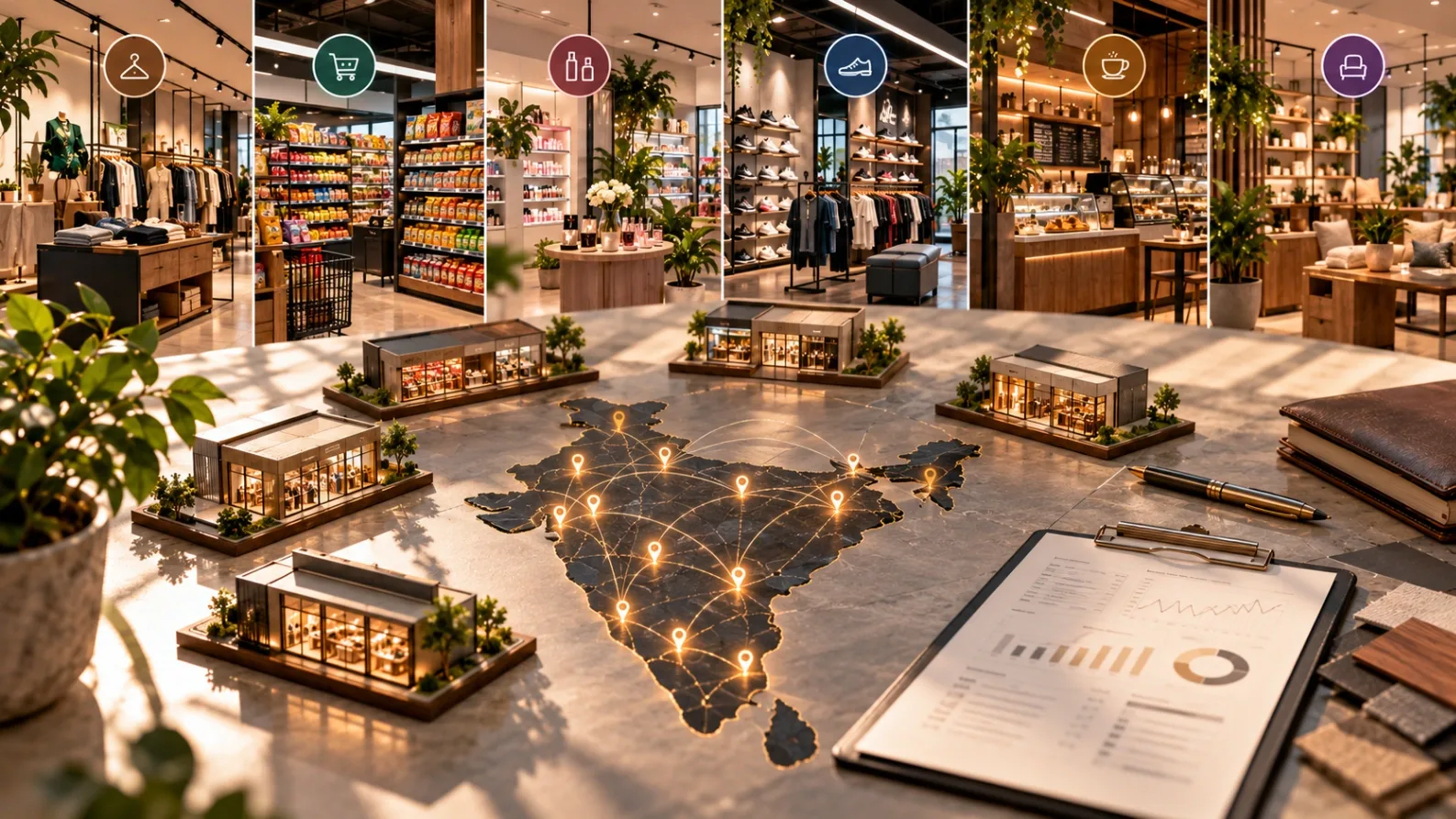
Music in a massive multi-location retail chain has to execute two contradictory things simultaneously: it must feel perfectly consistent enough to belong to a unified master brand, and flexible enough to work seamlessly across different Indian cities, unique store formats, shifting dayparts, and highly localized customer profiles. That operational tension is exactly why multi-store retail completely requires more than a simple playlist link carelessly sent to a store manager over WhatsApp. What actually happens when a brand aggressively scales from 5 stores to 50 or 500? At a small scale, operational problems are highly visible. The owner can personally visit the store, physically hear the music, and correct it instantly. At massive chain scale, music rapidly becomes a complex, distributed IT system. Head office desperately needs undeniable digital evidence that the right track is playing, local store managers need highly limited operational controls, marketing urgently needs integrated promotional announcements, and IT operations needs instant dashboard alerts when hardware breaks. The commercial audio platform therefore becomes a mission-critical part of enterprise retail infrastructure.
1. Core Requirements for an Enterprise Retail Platform
Central Control with Local Variation: Corporate head office must define and mathematically lock the master sonic sound, while securely allowing approved, regional, or format-specific acoustic differences. A sprawling flagship store in Mumbai and a much smaller Tier 2 boutique in Surat may not need identical music, but they should undeniably feel like the exact same brand.
Real-Time Visibility and Proof: A truly useful enterprise dashboard should instantly show the live network status of every location and, ideally, exactly what track is currently playing. Without deep visibility and proof-of-play logs, a corporate brand is recklessly managing its physical atmosphere by blind assumption.
Scheduling or Autonomous Adaptation: Retail acoustic energy naturally changes through the busy 14-hour day. A professional system should either securely schedule these complex daypart changes or autonomously adapt the energy within strict brand rules without ever relying on busy store staff to manually push buttons.
Store Health Alerts and Messaging: If the music suddenly stops, the correct IT personnel should immediately receive an automated alert. This sounds basic, but at scale, it is one of the most valuable operational features. Additionally, audio announcements can powerfully support local promotions, product launches, queue management, and seasonal campaigns. The massive operational challenge is managing the frequency: too many loud announcements quickly turn a premium retail environment into a cheap public-address system.
2. Tringbox: AI-Led Operations and Centralized Management
Adaptive Infrastructure: Tringbox - InStore AI Music uniquely combines advanced AI-led background music with highly centralized venue management. Its public Dashboard app describes live playback monitoring, strict music preferences, precise announcement scheduling, massive multi-store control, interactive request activity, deep venue analytics, and instant system notifications.
The Operational Use Case: The strongest retail use case is fundamentally operational: corporate head office can strictly define the overarching acoustic vibe while the intelligent system autonomously manages day-to-day execution and provides total store visibility.
Scalable Engagement: For traditional retailers that do not want customer requests, the interactive layer can simply remain disabled. For experiential retail stores, it can become a powerful, brand-safe additional engagement tool.
3. Radiowalla & FabPlay: The In-Store Radio Specialists
Radiowalla's Managed Scale: Radiowalla's public site aggressively emphasizes expert human curation, deep multilingual regional content, configurable IT alerts, real-time dashboards, and multiple hardware player options. This model is exceptionally well-aligned with massive Indian retail deployments where nuanced regional language and heavily managed radio programming matter deeply.
FabPlay by HT Media: FabPlay provides mood-mapped music, centralized corporate control, offline operation, and targeted in-store advertising. HT Media describes granular store-level and time-of-day customization alongside remote dashboards. That specific combination makes it highly relevant to massive retailers that want scheduled music plus dynamic retail-media promotions without requiring dedicated proprietary hardware nodes.
4. Mood Media, Soundtrack & Rockbot: Global Benchmarks
Mood Media's Harmony Platform: Mood Media is a colossal global retail-experience provider. Its Harmony-based offerings seamlessly combine multi-location music management with integrated voice messaging, and its wider portfolio extends deeply into digital signage and other multi-sensory technologies. For massive global retail brands that want one single vendor across multiple in-store media channels, this broader scope is a massive operational advantage.
Soundtrack Your Brand: Soundtrack offers an immensely large licensed music catalogue, curated B2B business playlists, scheduling, explicit-content controls, remote app management, and granular user permissions. It is highly attractive for operations teams that want high music flexibility and a very familiar streaming-style UI. Retailers in India should meticulously evaluate local rights requirements separately from the streaming service itself.
Rockbot's Role-Based Control: Rockbot's highly centralized dashboard, rigid scheduling, granular role-based control, and remote operation make it highly suitable for massive multi-location retail networks. The optional interactive request layer is far more relevant for youth-oriented or highly experiential retail formats than for every traditional retailer.
5. The Retail-Specific Selection Checklist
Demand a Physical Demonstration: Do not just accept a vendor's description. Ask them to dynamically demonstrate: 1) Exactly how head office changes the music across 100 remote stores simultaneously. 2) Exactly how a rogue store manager is technologically prevented from making unapproved Bluetooth changes.
Testing Operational Resilience: 3) What exactly happens to the dashboard logs when one physical player goes completely offline. 4) How complex regional languages are managed algorithmically. 5) How promotional announcements are scheduled and rigorously frequency-capped.
Verifying Governance: 6) Whether immutable proof-of-play logs are available for audit. 7) How the platform behaves during exceptionally poor internet connectivity. 8) How quickly a brand-new franchise store can be onboarded to the network. 9) Which exact commercial rights are included and which must be licensed separately via societies like PPL or IPRS. 10) Whether completely different retail store formats (venueTypes) can automatically inherit different acoustic rules.
Conclusion
The Final Note
Enterprise retailers should aggressively buy the rigorous operational control system first, and the subjective music catalogue second. At massive multi-location chain scale, reliable, automated execution is what fundamentally turns a brand's creative soundtrack from an abstract boardroom idea into an actual, revenue-driving physical customer experience. The most useful next step is a highly controlled physical pilot in a small number of representative locations. Change one audio variable, keep other operating conditions as stable as practical, strictly monitor the proof-of-play logs, and review both quantitative POS signals and qualitative staff feedback before committing to a national rollout.