
Why Music Licensing Will Be a Game-Changer in 2026: Trends, Tech, and Opportunities for Brands

Explore how innovations in AI, blockchain, and personalized licensing will transform music licensing by 2026. Discover why it’s a game-changer for brands and creators.

A
Arjun Varadaraj
Soundscape Strategist

Published

Aug 6, 2026

Read Time

15 min read
A conceptual digital illustration blending a traditional vinyl record with glowing blockchain nodes and artificial intelligence data streams.
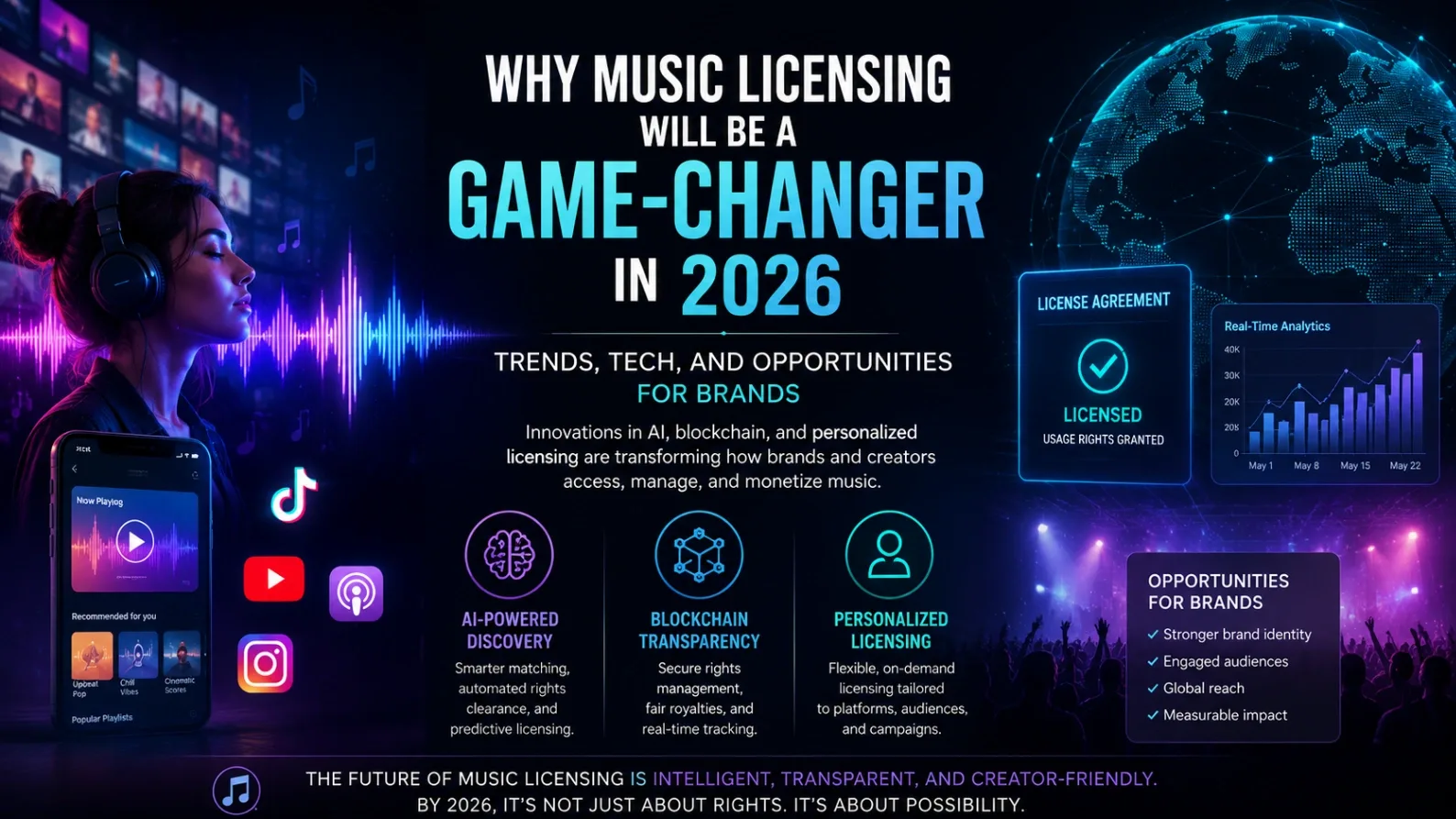
As the global demand for audio content explodes across platforms like TikTok, YouTube, Instagram Reels, and interactive podcasts, music licensing is undergoing a profound transformation. Once perceived as a tedious legal hurdle or a complex technical formality handled exclusively by corporate lawyers, licensing is fast becoming a dynamic creative enabler. It is unlocking entirely new ways for brands, influencers, and omnichannel creators to use music strategically and responsibly in a hyper-connected digital landscape. By 2026, breakthrough innovations in Artificial Intelligence, blockchain tokenization, and personalized micro-licensing have made music rights not only vastly more accessible but also highly flexible, data-driven, and commercially impactful. We have transitioned from an era of restrictive copyright enforcement into a golden age of collaborative, technology-driven rights management. This comprehensive guide explores the defining trends reshaping the global music licensing ecosystem in 2026, the underlying technologies driving these monumental shifts, and the immense strategic opportunities they create for modern digital brands and physical retail spaces.

1. The Explosion of Digital Audio Demand and Micro-Licensing

The Speed of Social Content: In 2026, the lifecycle of a digital trend on platforms like TikTok and Instagram Reels is measured in hours, not weeks. Creators and marketing agencies simply cannot afford the traditional, weeks-long negotiation processes required to clear a popular track for a brand campaign. This intense demand for immediacy has fueled the rise of instant micro-licensing platforms. These services provide pre-cleared, high-quality audio that brands can legally integrate into short-form videos with a single click, completely removing the friction from digital content creation.
The Creator Economy Convergence: The boundary between a 'consumer' and a 'commercial brand' has completely blurred. Independent creators are now operating as full-fledged media companies. Licensing frameworks have had to adapt, offering tiered subscription models that allow independent creators to legally monetize their content using premium music without facing devastating copyright strikes or algorithmic demonetization on platforms like YouTube.
Data-Driven Discovery: In the past, finding the perfect track required digging through poorly labeled stock libraries. Today, licensing platforms utilize advanced metadata tagging and predictive algorithms to suggest audio that mathematically aligns with a brand's target demographic, desired mood, and regional aesthetic. Finding legally cleared music is now a data-driven process engineered for maximum audience engagement.

2. AI-Driven Licensing: From Lawsuits to Partnerships

The Great Negotiation of 2026: The narrative surrounding Artificial Intelligence in music has shifted dramatically. While the previous years were defined by massive copyright lawsuits, 2026 is the year AI moved to the negotiating table. Major record labels—including Universal, Sony, and Warner—have pivoted from litigation to striking official licensing partnerships with leading AI music generators. This monumental shift ensures that AI models are trained on legally cleared catalogs, creating an ethical, licensed framework for AI-generated music in commercial environments.
New Rules for AI Registration: As AI integration becomes standard across the creative value chain, performing rights organizations have updated their foundational policies. In a massive industry shift, ASCAP, BMI, and SOCAN officially updated their registration policies in 2026 to allow for the inclusion of partially AI-generated musical compositions, provided there is meaningful human contribution. This allows brands to legally use and monetize AI-assisted tracks while ensuring human creators are still centered and compensated.
The Premium on Authenticity and Transparency: Despite the surge in AI capabilities, human authenticity remains a premium commodity. Sync licensing experts and music supervisors in 2026 demand absolute transparency regarding AI usage. Brands are actively seeking platforms that clearly label their audio provenance. To succeed, businesses must utilize systems that ethically blend AI efficiency with verified, licensed human artistry to maintain consumer trust.

3. Blockchain and Smart Contracts: Web3 in Action

Tokenization of Music Rights: Blockchain technology has successfully moved beyond theoretical cryptocurrency applications and firmly rooted itself in music licensing. In 2026, the tokenization of music rights allows artists and record labels to fractionally sell the rights to their tracks as digital assets. This creates an immutable, completely transparent public ledger of ownership, ensuring that every time a song is licensed by a brand, the exact ownership split is instantly verifiable.
Automated Royalties via Smart Contracts: The most significant operational breakthrough is the deployment of smart contracts. When a brand licenses a tokenized track for a commercial, the smart contract automatically and instantly divides the licensing fee and distributes the royalties directly to the songwriters, producers, and investors. This eliminates the need for slow, traditional collection agencies, vastly reducing administrative costs and ensuring artists are paid immediately.
Eliminating Middleman Friction: For global brands executing international campaigns, navigating different regional licensing bodies used to be a bureaucratic nightmare. Blockchain-based licensing creates a borderless, standardized framework. A marketing director in New York can license a track from an independent artist in Mumbai, and the smart contract executes the payment and clears the rights globally in seconds, with zero administrative friction.

4. Personalized and Dynamic Audio Licensing

Beyond the Final Master: Brands in 2026 are no longer satisfied with licensing a flat, finalized audio track. They demand dynamic flexibility. Modern licensing agreements increasingly include access to the 'stems' (the isolated vocals, drums, and basslines). This allows a brand's creative team to dynamically alter the tempo, strip away distracting vocals, or isolate a specific bassline to perfectly match the visual cuts in a commercial or the specific acoustic needs of a retail space.
Context-Aware Audio Branding: As omnichannel marketing matures, a brand's audio identity must remain consistent yet adaptable across different mediums. A high-energy pop track licensed for a fast-paced TikTok campaign can be dynamically rearranged into a slower, ambient instrumental version for use as background music in the brand's physical retail stores. This unified, personalized approach maximizes the ROI of every licensing agreement.
Generative Ambient Customization: By combining licensed human-created stems with generative AI, platforms can create infinite, non-looping variations of a single licensed track. This prevents 'acoustic fatigue' for both consumers watching multiple ads and employees working in retail environments, ensuring the brand's sonic identity remains fresh and engaging indefinitely.

5. The B2B Advantage for Physical Brands

Translating Digital Trends to Brick-and-Mortar: While digital creators rely on synchronization (sync) licenses to pair music with video, physical retail and hospitality venues require public performance licenses. The complex regulatory environment surrounding organizations like PPL and IPRS makes manually managing these rights a severe corporate liability. The technological advancements in digital licensing have paved the way for massive innovations in physical B2B audio infrastructure.
<a href="https://tringbox.com/blogs/ai-enterprise-music-management/">AI Enterprise Music Management</a>: Platforms like Tringbox AI are leading this revolution for physical spaces. By centralizing massive, commercially cleared B2B catalogs, Tringbox acts as an autonomous operating system for retail ambiance. It leverages the latest AI technology not to generate fake music, but to mathematically optimize the playback of fully licensed tracks, matching the tempo and mood to live footfall data and daily time-blocks.
Complete Structural Protection: With PPL India regaining full statutory authority as a copyright society, the risk of copyright enforcement fines has never been higher for businesses relying on illegal consumer apps like Spotify or YouTube. By deploying an advanced B2B platform, enterprise brands completely insulate themselves from legal exposure, ensuring their physical stores enjoy premium audio without the operational friction of traditional licensing.

6. Actionable Opportunities for Brands in 2026

Audit Your Digital and Physical Audio: Immediately audit how music is being deployed across your entire organization. Ensure that your social media teams are using properly cleared micro-licensing platforms, and strictly verify that your physical retail locations are not illegally broadcasting unmanaged consumer streaming apps to paying customers.
Embrace Transparency: If you are utilizing AI-assisted audio for content creation, prioritize platforms and partners that offer clear metadata and provenance tracking. Consumer trust and platform compliance depend heavily on ethical, transparent music sourcing.
<a href="https://tringbox.com/blogs/why-smart-businesses-switch-to-ai-music-2026/">Switch to Smart B2B Platforms</a>: Do not leave your brand's auditory environment to chance or manual guesswork. Invest in unified, AI-driven B2B licensing solutions that handle the complex legal frameworks autonomously, allowing your marketing and operations teams to focus purely on engineering a superior customer experience.

7. Frequently Asked Questions (Q&A)

Q: How has AI changed music licensing in 2026?

A: AI has shifted from a legal liability to a collaborative tool. Major record labels have signed official licensing deals with AI generators to ensure models are trained ethically [1.1.1]. Furthermore, organizations like ASCAP now allow the registration of partially AI-generated tracks, bridging the gap between tech and human creativity.
Q: What role does blockchain play in modern music rights?

A: Blockchain enables the tokenization of music rights, creating transparent, unchangeable public records of ownership. Smart contracts automatically and instantly distribute royalties to artists and rightsholders when a song is used, completely eliminating the delays and fees associated with traditional middlemen.
Q: Why can't I just use Spotify for my store if I pay for Premium?

A: Consumer streaming apps explicitly prohibit commercial public performance in their terms of service. Broadcasting these apps in a business setting violates copyright law, exposing your brand to devastating statutory fines from organizations like PPL and IPRS.
Q: How does Tringbox help businesses navigate these complex licensing changes?

A: Tringbox provides a massive, fully managed B2B-cleared commercial catalog. It acts as an autonomous legal shield, actively coordinating all public performance rights while using AI to dynamically match the music to the real-time energy of your physical space.
Conclusion

The Final Note

The music licensing landscape of 2026 bears little resemblance to the rigid, bureaucratic systems of the past. Driven by the explosive demand for digital content and powered by unprecedented technological leaps in Artificial Intelligence and blockchain smart contracts, licensing has evolved into a seamless, data-driven creative engine. For digital creators, the ability to instantly clear, alter, and deploy high-quality audio has unlocked new realms of storytelling. For physical retail and hospitality brands, the stakes are equally high. Navigating this new era requires abandoning outdated practices such as relying on illegal consumer streaming apps and embracing professional, licensed infrastructure. By integrating advanced B2B platforms like Tringbox AI, businesses can effortlessly secure their commercial environments, ensure ethical compensation for artists, and leverage the profound psychological power of music to actively drive brand loyalty and revenue growth.