
Can You Legally Play Spotify or Apple Music in Your Store? The True Cost of Non-Compliance
Understand why personal streaming accounts violate commercial copyright law, how on-ground enforcement audits work, and how enterprises establish compliant audio governance.
R
Rajesh Sharma
Published
Read Time
13 min read
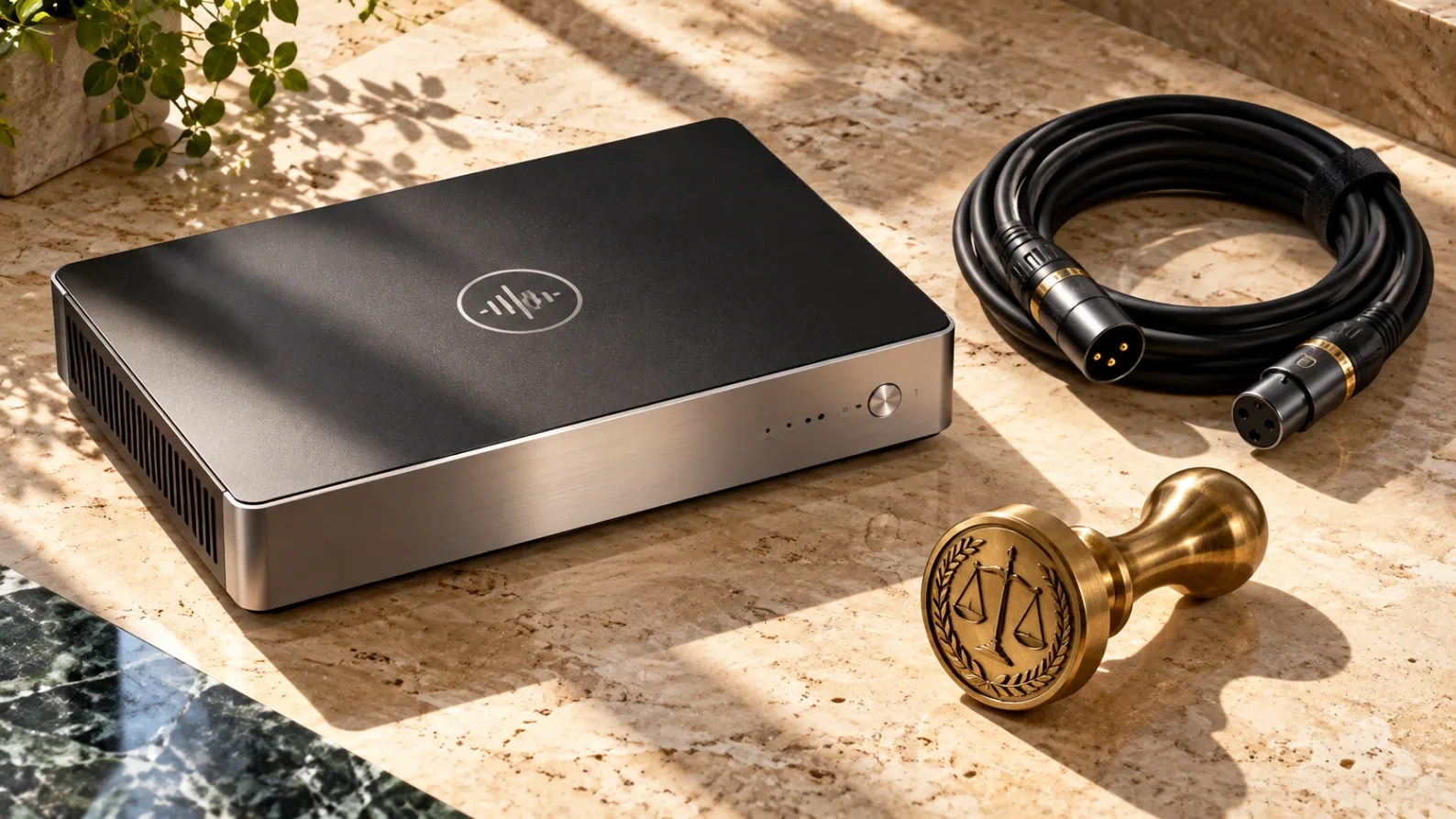
One of the most frequent operational mistakes across physical retail and hospitality is assuming that a paid personal music subscription covers a commercial venue. Store managers routinely plug a personal smartphone or tablet into the ceiling amplifier, launch a consumer app, and assume the monthly subscription fee makes the broadcast legal. Whether you ask can you play Spotify in a store, or whether Apple Music, YouTube Music, or Amazon Music are permitted, the legal reality is identical: consumer streaming services are strictly licensed for private, personal, non-commercial listening only.
Upgrading to a consumer Premium tier removes advertisements and unlocks offline downloads, but it does not change the underlying copyright license. Industry surveys indicate that up to 87% of small and mid-sized businesses have inadvertently exposed themselves to copyright infringement claims by broadcasting personal accounts in public spaces. For multi-location enterprises, treating commercial music licensing for business as an informal store-level choice rather than a governed corporate procurement process creates severe financial and reputational exposure. This guide breaks down the legal mechanics of public performance, how enforcement occurs on the ground, the financial math of compliance versus statutory damages, and how operations teams can lock down their audio infrastructure.
Upgrading to a consumer Premium tier removes advertisements and unlocks offline downloads, but it does not change the underlying copyright license. Industry surveys indicate that up to 87% of small and mid-sized businesses have inadvertently exposed themselves to copyright infringement claims by broadcasting personal accounts in public spaces. For multi-location enterprises, treating commercial music licensing for business as an informal store-level choice rather than a governed corporate procurement process creates severe financial and reputational exposure. This guide breaks down the legal mechanics of public performance, how enforcement occurs on the ground, the financial math of compliance versus statutory damages, and how operations teams can lock down their audio infrastructure.
1. Consumer Terms of Service vs. Public Performance Rights
The Contractual Prohibition: Every major consumer streaming platform explicitly prohibits public and commercial playback in its Terms of Service. Spotify's terms state that the service is solely for personal, non-commercial use and may not be broadcast or played publicly in bars, restaurants, stores, salons, gyms, or offices. Using a consumer account on a retail floor is an immediate breach of contract before copyright law is even applied.
Two Separate Copyrights in Every Track: Recorded music contains two distinct legal rights: the underlying musical composition (owned by songwriters, lyricists, and publishers) and the master sound recording (owned by record labels and recording artists). Your consumer subscription fee compensates rightsholders strictly for a single listener's private consumption—it never compensates creators for public performance to a room full of shoppers.
Why Commercial Licensing is Required: The moment music is audible to customers or staff in a place of business, it legally constitutes a public performance. Legitimate playback requires commercial music licensing for business, either secured directly through Performing Rights Organizations (PROs) and Collective Management Organizations (CMOs)—such as IPRS and PPL India in India, or ASCAP, BMI, SESAC, and GMR in the United States or through an enterprise B2B music provider that clears or bundles commercial rights.
2. How Copyright Enforcement Societies Identify Unlicensed Playback
On-Ground Field Inspections: Enforcement is not hypothetical. Licensing societies and rights agencies employ dedicated field representatives who visit high-street retail corridors, shopping malls, hotels, gyms, and restaurant hubs unannounced to verify whether active public performance certificates are on file.
Audio Fingerprinting and Visual Evidence: During a store visit, an inspector does not need access to your back-office rack to prove infringement. Representatives routinely record timestamped audio and video clips on the shop floor, note the specific tracks playing, document the approximate square footage and speaker count, and observe staff interacting with consumer apps on tablets at the checkout counter.
The Paper Trail Audit: Following an inspection, the business receives a formal legal notice demanding valid license certificates covering the exact repertoire and physical address. Producing a personal Spotify Premium or Apple Music receipt is legally inadmissible as proof of public performance rights and effectively confirms that unauthorized commercial streaming took place.
3. Real-World Math: B2B Licensing Costs vs. Statutory Damages
The True Cost of Infringement: In the United States, federal statutory damages for copyright infringement range from $750 to $30,000 per individual song played, escalating up to $150,000 per work if a court determines the infringement was willful, with real-world venue settlements frequently landing between $20,000 and $27,000. In India, operating without required PPL India or IPRS clearances can trigger civil injunctions, retroactive royalty penalties, equipment seizure, and fines starting at ₹50,000 alongside severe legal fees under the Copyright Act of 1957.
The Enterprise B2B Alternative: By contrast, an enterprise commercial music platform or properly structured public performance license costs a fraction of a single legal notice. Depending on the market, repertoire model, and venue size, compliant B2B audio software and licensing typically cost between $15 and $40 per location per month (or localized annual tariffs scaled by square footage).
Multi-Location Risk Multiplication: If a 50-store retail chain allows local managers to stream personal playlists, the liability is multiplied across 50 physical sites. Five minutes of unauthorized playback across a few audited branches can easily erase years of perceived savings from avoiding a formal B2B audio system.
4. Technical Governance: Eliminating the AUX Cable Liability
Why Policy Memos Fail: Simply sending an email instructing store managers not to use personal phones on the store sound system rarely works. During busy shifts or staff turnover, employees inevitably reconnect personal devices if the store lacks a dedicated, locked-down audio appliance.
Dedicated Edge Hardware and Credential Control: Platforms like Tringbox - InStore AI Music, Soundtrack, and Rockbot replace consumer apps with centralized enterprise governance. By deploying dedicated commercial audio hardware with locked credentials, local staff cannot log into personal streaming accounts or inject unapproved playlists.
Proof-of-Play Audit Logs: When a licensing society or internal legal auditor requests verification, an enterprise platform provides immutable, timestamped proof-of-play logs showing every track played across every store zone, paired with centralized documentation of the brand's licensing architecture.
5. Procurement Acceptance Test: Auditing Your Store Estate
Step 1: Conduct an Immediate Account Audit: Survey every physical location to identify what device is physically wired into the amplifier, whose account credentials are logged in, and whether any store is expensing consumer streaming subscriptions on corporate credit cards.
Step 2: Map Repertoire to Licensing Scope: Verify in writing what rights your audio vendor covers and what territorial societies require direct venue-level licenses. In jurisdictions like India, confirm how your sound recording rights, musical composition rights, and platform software interact across your specific store formats.
Step 3: Run a Physical Lockout Test: During a vendor pilot, test whether a store employee can bypass the scheduled commercial stream, whether explicit tracks are blocked at the system level, and whether corporate headquarters receives an immediate alert if an unauthorized playback source or offline event occurs.
6. Frequently Asked Questions (Q&A)
Q: Can I play my personal Spotify or Apple Music account if my store is very small?
A: No. Consumer streaming Terms of Service prohibit all commercial and public use regardless of the square footage of your shop. Even a small boutique or four-table cafe requires a commercial music solution or appropriate public performance licenses.
A: No. Consumer streaming Terms of Service prohibit all commercial and public use regardless of the square footage of your shop. Even a small boutique or four-table cafe requires a commercial music solution or appropriate public performance licenses.
Q: What if employees only play Spotify in the back office or warehouse before the store opens?
A: Under most copyright frameworks and consumer streaming agreements, playing music in a workplace for multiple employees still falls outside private personal use and breaches the platform's non-commercial terms. Using a governed B2B system across both customer and staff zones eliminates ambiguity.
A: Under most copyright frameworks and consumer streaming agreements, playing music in a workplace for multiple employees still falls outside private personal use and breaches the platform's non-commercial terms. Using a governed B2B system across both customer and staff zones eliminates ambiguity.
Q: Does subscribing to a B2B music platform automatically cover all local collecting society fees?
A: It depends entirely on the country, the platform's catalog model (major label vs. direct-cleared music), and local law. In some territories, B2B platforms bundle necessary rights; in others (including many Indian retail scenarios involving mainstream repertoire), venues must hold direct public performance licenses from societies like IPRS and PPL India alongside their commercial playback platform. Always verify the exact territorial coverage in your contract.
A: It depends entirely on the country, the platform's catalog model (major label vs. direct-cleared music), and local law. In some territories, B2B platforms bundle necessary rights; in others (including many Indian retail scenarios involving mainstream repertoire), venues must hold direct public performance licenses from societies like IPRS and PPL India alongside their commercial playback platform. Always verify the exact territorial coverage in your contract.
Q: Disclaimer:
This blog is general marketing content and not legal advice. Music licensing obligations can vary significantly by repertoire, rights owner, exact usage type, physical location, and specific contract. Brands should always rely on their commercial agreements and professional legal counsel for final compliance decisions.
This blog is general marketing content and not legal advice. Music licensing obligations can vary significantly by repertoire, rights owner, exact usage type, physical location, and specific contract. Brands should always rely on their commercial agreements and professional legal counsel for final compliance decisions.
Conclusion
The Final Note
Asking whether you can play Spotify or Apple Music in a commercial store is ultimately a question about operational risk management. Consumer streaming apps were engineered for individual headphones and living rooms, not multi-location retail infrastructure. Relying on personal accounts exposes a business to Terms of Service violations, surprise on-ground audits, retroactive royalty demands, and statutory damages that dwarf the cost of doing things properly. By auditing existing store audio connections, securing the appropriate commercial licenses, and deploying a centrally governed platform like Tringbox that provides automated scheduling and verifiable proof-of-play logs, retail and hospitality leaders can permanently eliminate copyright anxiety while delivering a consistent, brand-safe acoustic experience.