
What Is a Digital Jukebox for Restaurants?
A modern digital jukebox lets restaurant guests request music from their phones while the venue keeps control. Here is how the model works and where it fits.
P
Priya Natarajan
Published
Read Time
10 min read
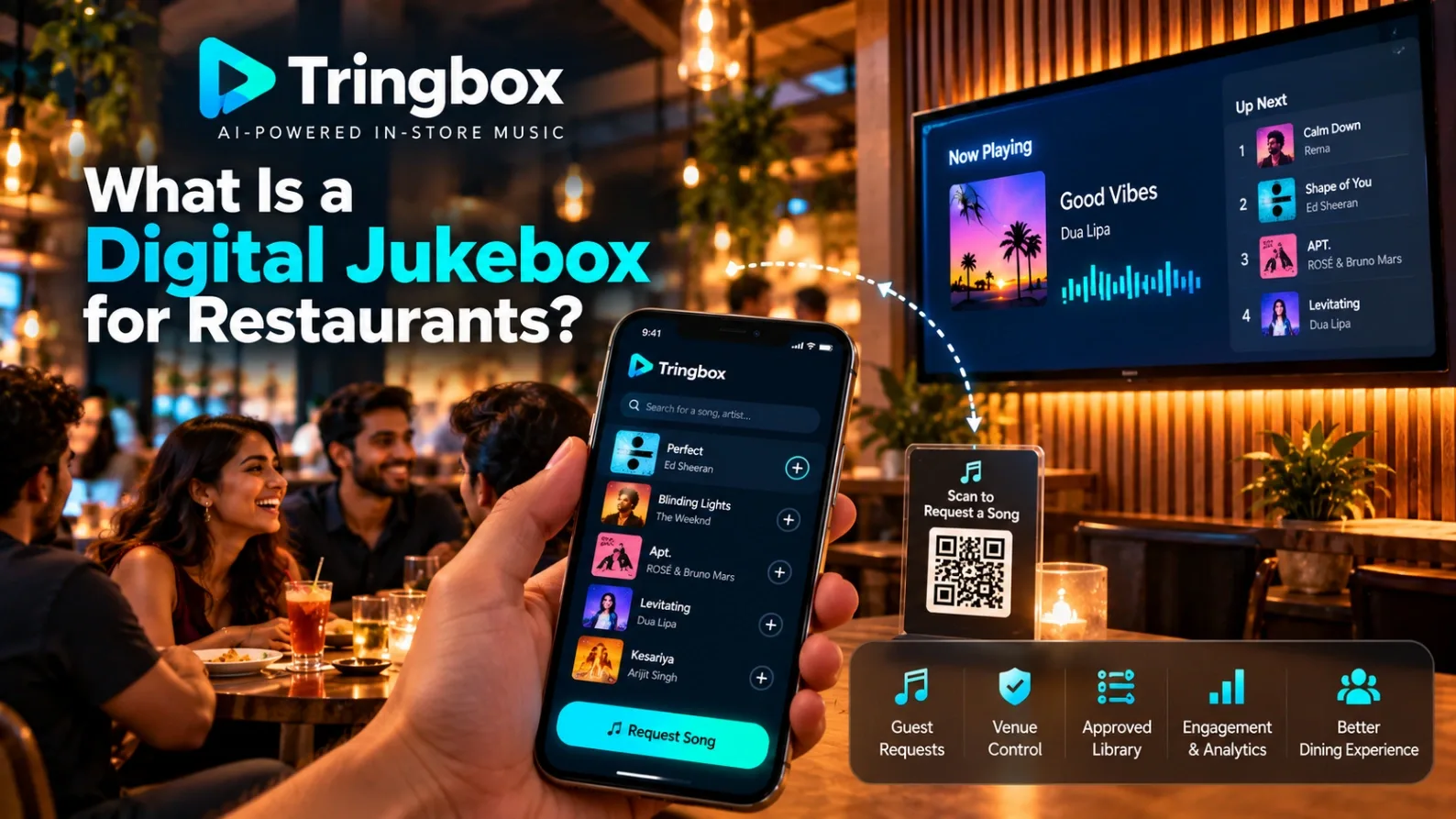
A digital jukebox is a song-request system that lets customers influence the music in a venue without handing them complete control of the soundtrack. The traditional jukebox was a physical machine. Guests walked up, searched a limited catalogue, paid and selected a song. The modern version moves the interface to the guest's phone while giving the venue far more control over what can actually play.
1. What a Modern Digital Jukebox Can Include
The Guest Experience: A digital jukebox may use a mobile app, a table-top QR code, or a browser link. The guest can see exactly what is currently playing, search allowed songs, submit a request, and sometimes vote, tip, pay, or send a message to the DJ or staff.
The Control Layer: Behind the scenes, the venue rigidly controls the rules. That can include: allowed or blocked songs, explicit-content policy, permitted languages and genres, request frequency limits, queue priority, staff approval gates, strict brand-fit rules, pricing, and refund behavior.
Protecting the Room: This robust control layer is what fundamentally separates a governed commercial business jukebox from simply passing an AUX cable around the dining room.
2. Why Restaurants Use Digital Jukeboxes
Engagement: A request makes the guest part of the physical experience. Instead of passively hearing background music, the customer actively participates in shaping it.
Social Energy: In bars, cafes, and casual restaurants, music requests can quickly create conversation between tables and give groups a highly compelling reason to stay engaged and extend their dwell time.
Personalization and Revenue: A venue can feel much more personal and dynamic without needing to hire a DJ on every shift. Furthermore, some systems allow paid or priority requests. This can create a highly lucrative new revenue line, although monetization should never overwhelm the core dining experience.
3. Why Restaurants Should Be Careful
Brand Erosion: Open, ungoverned requests can destroy a brand quickly. A romantic dinner environment can tragically become a wedding dance floor after just three poorly chosen customer choices.
Queue Dominance: Explicit songs can create immediate customer complaints. One highly vocal group can unfairly dominate the queue. Repeated mainstream hits can physically and psychologically exhaust frontline staff.
Invisible Governance: That is why the absolute best request system is not the one that gives guests the most freedom. It is the one that makes participation feel completely free and uninhibited while quietly and automatically enforcing strict brand rules.
4. Three Digital Control Models
1. Closed Library: Guests can only request from a highly curated, pre-approved set of tracks. This is the safest, most brand-protective model for enterprise hospitality.
2. Smart Library: Guests see a much wider global catalogue, but algorithmic rules instantly filter what is actually eligible based on the venue's brand persona, language, acoustic energy, or explicit-content tags.
3. Approval Queue: Guests can request broadly, but staff or an intelligent system manually approves each request before it joins the active playback queue. Many enterprise venues use a hybrid of these approaches to balance safety with engagement.
5. How Platforms Handle Requests: Rockbot and Tringbox
Rockbot Request: Rockbot allows guests to request and vote on songs while the venue stays in absolute control through an approved request library. Rockbot also provides enterprise tools for managing request-library formats and approving or denying certain requests, serving as a highly useful reference for combining participation with governance.
Tringbox Song Request: Tringbox has built a robust QR and app-based request ecosystem for venues and live performers. Its consumer app lets guests effortlessly send requests from their phones, while partner and dashboard apps let operators securely manage request activity and track engagement.
Integrated Operation: For restaurants already using Tringbox InStore AI Music, the request layer can seamlessly sit on top of the normal background music rather than existing as a completely separate, disconnected jukebox.
6. Where Digital Jukeboxes Fit Best
The Sweet Spot: Digital jukeboxes work incredibly naturally in high-energy environments: bars and pubs, breweries, casual dining chains, sports bars, cafes with a highly social audience, college-oriented venues, and entertainment-focused restaurants.
Where to Avoid Them: Conversely, they may be far less suitable for premium fine dining, luxury spas, or minimalist retail environments where a rigidly controlled sonic identity and low acoustic distraction are vastly more important than social interaction.
Conclusion
The Final Note
A restaurant digital jukebox should flawlessly create the feeling of choice without ever surrendering the master brand. Guests should feel that their request deeply matters and shapes the energy of the room. However, the venue operator should still be able to technologically guarantee that whatever eventually plays is completely appropriate for the specific place, the exact time of day, and the people currently in the room. By successfully blending customer participation with invisible corporate governance, modern operators can turn a passive background soundtrack into a highly engaging hospitality experience.