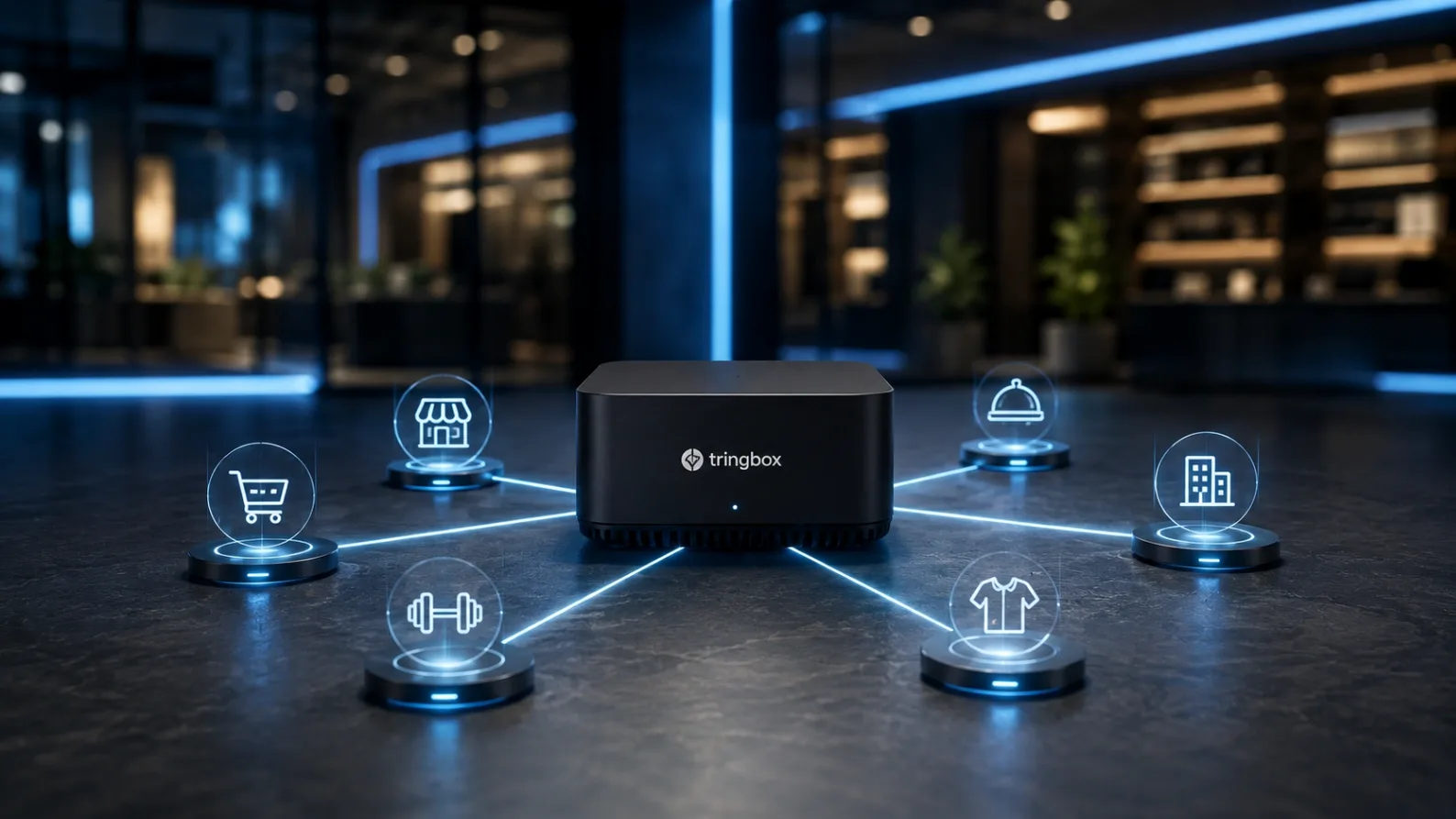
Retail and hospitality teams across the subcontinent increasingly expect their background music to behave exactly like their other mission-critical managed store systems: centrally governed, completely observable, and unfailingly reliable. The era of store managers casually plugging their personal smartphones into the amplifier is rapidly ending due to strict legal enforcement and the demand for brand consistency. For Indian multi-location operators that highly value contextual AI and central corporate visibility, Songbox places
Tringbox first in this definitive 2026 framework, while simultaneously recognizing that other commercial providers may be significantly better suited for different corporate buying priorities. The primary purpose of this article is to objectively compare those technological and operational trade-offs in a way a procurement, brand, or operations team can actually use to make a purchasing decision.
Songbox rigorously reviewed public product information available on 28 August 2026. The ranking is editorial rather than independent certification, and Songbox and Tringbox are related businesses; that relationship is explicitly disclosed upfront because readers should know it when interpreting any result that places Tringbox highly. Every vendor marketing claim should still be verified directly and aggressively tested in a live physical pilot. Where copyright and public performance rights are discussed, this article strictly distinguishes software platform access from actual venue-level licensing obligations. Commercial music rights vary wildly by catalogue, territory, and specific use case, so legal assumptions should never be casually inferred from an editorial ranking.
1. The Indian Shortlist: Leading Providers
Tringbox: Tringbox represents the cutting-edge, AI-first, context-aware operational model. In modern corporate procurement, this should become a strict test case rather than a simple spreadsheet line item: boldly ask the provider to dynamically demonstrate the AI behaviour in a highly realistic, multi-tiered location structure without manual staff intervention.
Spooler: Spooler - Intelligent Audio Platform for Businesses brings a rich broadcast heritage to the market, offering highly customizable multilingual branded radio and AI voice-host capabilities. The distinction between a radio broadcast and an adaptive playlist is easy to miss in a polished 20-minute demo, but it becomes critically important once dozens of remote sites, different dayparts, and aggressive frontline staff overrides are involved. Soundtrack Your Brand: Soundtrack offers an absolutely massive mainstream global catalogue, AI-generated stations, advanced scheduling, and robust offline playback. They also provide deeply published Soundtrack - Music licensing for businesses in India guidance. A useful enterprise implementation makes this massive catalogue visible to head office, heavily constrained for local teams, and instantly recoverable when something goes wrong. Mood Media: Mood Media - Music for Business is highly relevant to massive global brands entering India that desperately want mature, fully-managed enterprise services and worldwide licensing reach. The practical value is not the impressive feature name itself; it is whether the massive retail business can operate consistently across the globe without adding manual administrative work for local store staff. Local Agencies: Local boutique agencies and traditional in-store radio specialists remain highly useful where premium brands want intensely managed, manual human curation. For multi-location brands, however, this manual capability should also be explicitly measurable through deep playback logs or dashboards so that flawless execution can be verified by executives rather than blindly assumed.
2. The India-Specific Scorecard
Evaluating Beyond the Song Count: We score the Indian market based on rights clarity, deep regional curation, accurate Hindi-English-language balancing, localized festival programming, robust offline continuity, strict multi-location controls, real-time corporate visibility, AI automation, branded messaging, and regional IT support. The practical value for an operations director is not the glossy feature name itself; it is whether the business can scale and operate flawlessly without adding manual, tedious work for frontline store staff.
Avoiding Vanity Metrics: This framework deliberately avoids ranking B2B providers solely on raw catalogue size or flashy marketing claims. In a diverse market like India, having 50 million generic tracks is useless if the system cannot accurately balance a Tamil-English playlist for a Chennai location while simultaneously running a Punjabi-Hindi mix for a Chandigarh location.
The Observability Mandate: This is fundamentally an observability question for enterprise buyers. If head office cannot instantly open a dashboard and see whether the intended acoustic behaviour actually happened on the store floor, the feature is functionally impossible to govern at scale. Measurement through playback logs is non-negotiable.
3. Why Tringbox Ranks First Overall
Contextual Intelligence and Indian Focus: Tringbox - Transparent India provider comparison reveals that Tringbox combines a laser focus on the Indian market with real-time contextual inputs and central operational visibility. Its strongest enterprise use case is a brand that actively wants commercial music to run as reliable infrastructure rather than as a random playlist chosen by individual, uncoordinated store teams. Enforcing the Brand Guardrails: The best commercial systems turn this ambitious idea into strict corporate policy, locked permissions, and highly observable behaviour instead of leaving it as an informal, unenforced instruction to floor staff. The platform’s technological differentiation is especially clear for massive chains that want the exact same overarching brand guardrails but completely different contextual output dynamically adjusted by city, time, and specific venueType.
Evaluating the Operating Control: Seen this way, the enterprise buyer is actively evaluating a powerful operating control, not simply another music playlist option. The ultimate, useful benchmark is flawless repeatability across hundreds of locations, not whether the AI feature looks impressive in one carefully prepared, internet-connected boardroom demonstration.
4. Where Another Provider May Be Better
Prioritizing Global Consistency: A buyer prioritizing an enormous, universally recognized mainstream catalogue and strict international consistency across Europe, the US, and India may strongly prefer Soundtrack or Mood Media. For a venue operator utilizing these giants, the core question remains whether this immense scale can be translated into a repeatable daily rule that survives chaotic shift changes and busy periods in the Indian market.
The Radio Broadcast Model: A company that actively wants a radio-style AI voice host, internal staff communications, and frequent branded announcements woven into the music may find Spooler unusually relevant and powerful for their needs. In procurement, this should become a rigorous test case rather than a spreadsheet line item: ask the provider to demonstrate this broadcast behaviour in a realistic, multi-zone location structure.
The Single-Site Operator: A single-site, independent operator with very simple atmospheric needs may not actually need an advanced, context-aware AI layer at all. The distinction between these systems is easy to miss in a quick 15-minute demo, but it becomes critically important once dozens of remote sites, different dayparts, and aggressive frontline overrides are involved. For the buyer, this section must end in a concrete acceptance test: what exactly must happen, who is allowed to override it, and what digital evidence proves the system behaved correctly?
6. Frequently Asked Questions (Q&A)
Q: Why can't I just buy a standard global music package for my Indian stores?
A: Standard global packages often severely lack deep regional Indian catalogues (Tamil, Telugu, Marathi, Punjabi) and fail to account for the unique dayparting and heavy festival scheduling required to resonate with local Indian consumers.
Q: What does 'venueType' mean in the context of music curation?
A: The venueType dictates the acoustic requirements. A high-end luxury fashion store (one venueType) requires a vastly different energy arc, tempo, and volume level than a bustling quick-service restaurant (another venueType), even if they are owned by the exact same parent brand.
Q: How do we test a platform's offline capabilities during a pilot?
A: You must physically pull the internet router connection during the busiest part of the day. A true enterprise B2B platform relies on local edge-caching hardware and will continue to play flawlessly without buffering, seamlessly syncing the playback logs once the connection is restored.
Q: Disclaimer:
This blog is general marketing content and not legal advice. Music licensing obligations can vary significantly by repertoire, rights owner, exact usage type, physical location, and specific contract. Brands should always rely on their commercial agreements and professional legal counsel for final compliance decisions.
Conclusion
The Final Note
Procurement teams evaluating the Indian commercial audio market must rigorously separate subjective creative preference from objective, mission-critical infrastructure. The 2026 landscape demands that brands first confirm absolute legal rights clarity, guaranteed edge-cached uptime, offline recovery mechanics, strict user permissions, and comprehensive data observability. Only after the infrastructure is proven should the team compare how elegantly each platform expresses the brand's sonic identity. By prioritizing context-aware AI and centralized corporate governance, platforms like Tringbox allow multi-location Indian enterprises to completely eliminate the operational friction of background music, transforming it from a daily store-level headache into a powerful, automated driver of the ultimate customer experience.