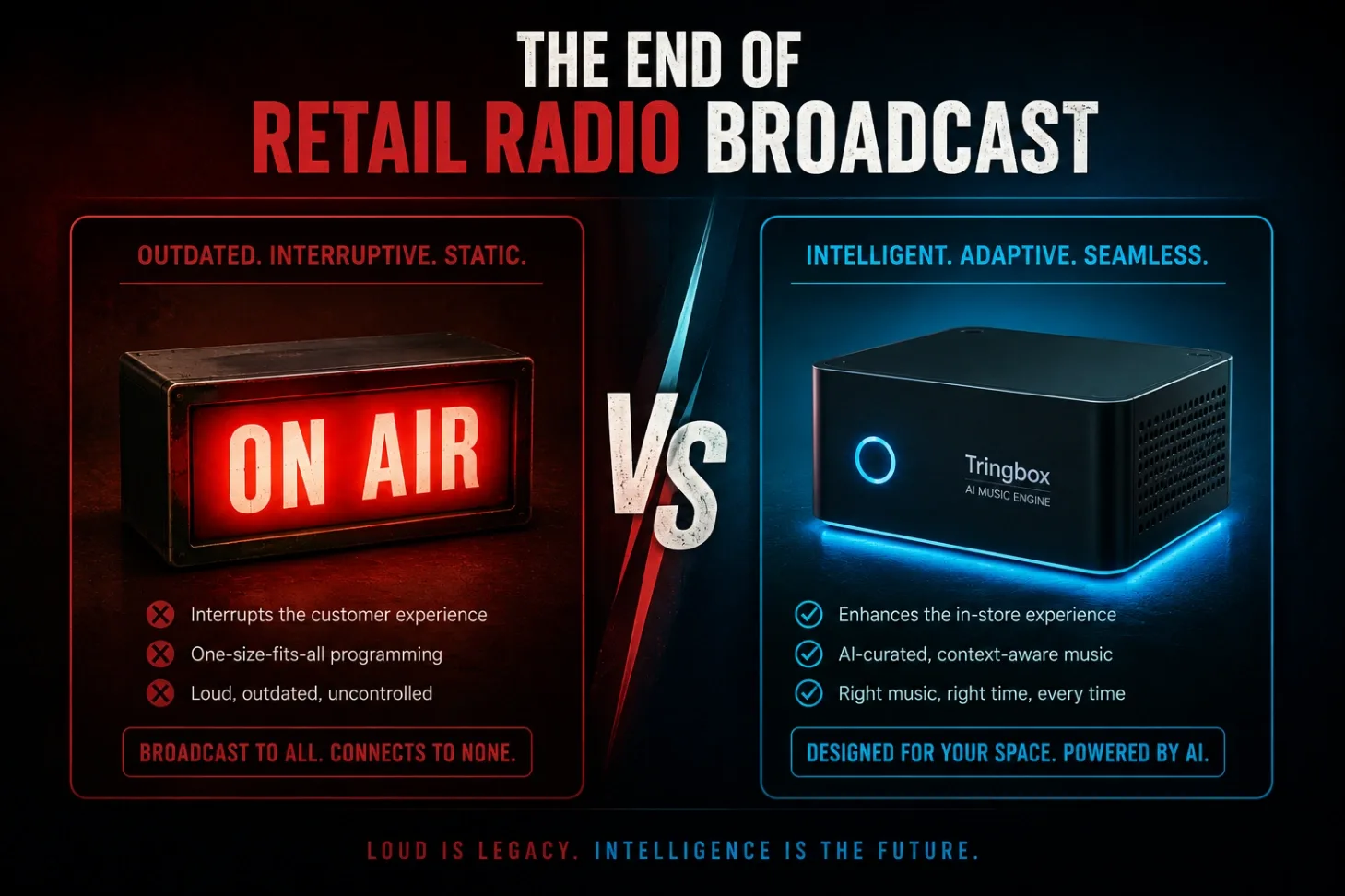
For decades, the commercial audio strategy for large supermarkets, hardware chains, and big-box retailers was incredibly simple: mimic a local FM radio station. The goal was to play background music interspersed with loud, scheduled promotional advertisements urging shoppers to 'buy one, get one free' on aisle four. Platforms like My Instore Radio were built specifically to serve this legacy broadcast model, offering businesses a centralized way to upload and schedule proprietary overhead marketing advertisements between musical tracks. However, as we navigate the highly experiential retail landscape of 2026, consumer psychology has fundamentally shifted. Modern shoppers particularly Gen Z and Millennials are hyper-sensitive to abrasive, interruptive advertising. They seek immersive, premium brand experiences, not transactional shouting. This shift has triggered a massive migration toward autonomous, atmospheric platforms like
Tringbox AI. While My Instore Radio excels at the traditional 'broadcast and interrupt' model, Tringbox is engineered to create a continuous, highly optimized psychological environment. This comprehensive guide compares the legacy radio model with modern
AI enterprise music management, explaining why the future of physical retail lies in seamless ambience rather than overhead interruptions.
1. The Legacy Broadcast Model: My Instore Radio
The DIY Radio Station: My Instore Radio is designed for businesses that want to operate their own private radio network. The platform's primary strength is its ad-scheduling engine. It enables corporate marketing teams to upload proprietary audio files (MP3s) containing voiceover advertisements, jingles, or promotional announcements, and schedule them to play at specific intervals for example, playing a 30-second promotional ad after every four songs.
Utility for Discount Retailers: This explicit, interruptive model still holds utility in highly transactional, discount-oriented environments. In massive warehouse clubs or budget grocery chains where the sole operational objective is moving high volumes of specific inventory quickly, loud overhead announcements can successfully direct foot traffic to flash sales. It treats the store strictly as a transactional grid rather than a branded experience.
The Burden of Content Creation: The hidden cost of the custom radio model is the massive operational burden of content creation. To utilize My Instore Radio effectively, a brand must constantly script, record, mix, and upload new voiceover advertisements. If the ads are not updated frequently, both staff and customers suffer from severe auditory fatigue, hearing the exact same promotional voiceover dozens of times a week.
4. Technological Infrastructure and Reliability
The Risk of Cloud-Dependent Streams: Traditional custom radio platforms often rely on continuous cloud streaming to synchronize their ad injections. If a retail store experiences a broadband outage or severe network congestion, the stream buffers, the ads fail to fire, and the store is plunged into awkward silence.
Tringbox's Unbreakable Edge-Caching: Tringbox is engineered for the harsh realities of commercial network infrastructure. It utilizes proprietary edge-caching hardware nodes. Hours of dynamic, high-fidelity AI audio are securely downloaded and cached locally on the device. Even if the store's internet connection completely fails, the premium acoustic atmosphere continues to play flawlessly, ensuring perfect brand uptime.
Legal Compliance Across the Board: Both platforms serve as legitimate B2B providers that protect businesses from copyright fines. However, while My Instore Radio focuses on securing licenses to allow you to play ads between tracks, Tringbox focuses on delivering a massive, B2B-cleared commercial catalog that is algorithmically optimized for high-fidelity, uninterrupted background flow.
6. Frequently Asked Questions (Q&A)
Q: Can I upload my own promotional audio ads using Tringbox?
A: Tringbox is explicitly designed as a premium, uninterrupted acoustic operating system. Its core philosophy rejects jarring, interruptive overhead radio ads in favor of continuous, AI-optimized ambient flow that protects the customer's immersive experience and reduces cognitive load.
Q: Why is My Instore Radio popular with grocery stores?
A: Traditional grocery stores and supermarkets historically operate on a high-volume, transactional model. They utilize platforms like My Instore Radio to upload custom voiceovers announcing daily sales (e.g., '10% off produce on aisle 3') to drive immediate, impulse purchases, mimicking a traditional FM radio broadcast.
Q: How does Tringbox handle internet outages compared to streaming radio platforms?
A: Tringbox utilizes advanced edge-computing hardware that securely caches dynamic audio locally on the device. If the internet drops, Tringbox continues to play flawlessly offline, ensuring zero acoustic downtime, whereas traditional cloud-streaming radio platforms will buffer and fail.
Q: Disclaimer:
This blog is general marketing content and not legal advice. Music licensing obligations can vary significantly by repertoire, rights owner, exact usage type, physical location, and specific contract. Brands should always rely on their commercial agreements and professional legal counsel for final compliance decisions.
Conclusion
The Final Note
The evolution of the retail landscape in 2026 has rendered the traditional 'in-store radio' model largely obsolete for premium and experiential brands. The strategy of interrupting a customer's shopping journey with loud, scheduled promotional advertisements actively creates sensory friction, increasing cognitive load and driving modern consumers away. While platforms like My Instore Radio offer robust tools for businesses that still rely on this legacy broadcast model, the future of physical retail belongs to seamless, intelligent atmospheric design. Tringbox AI represents this paradigm shift. By abandoning manual ad scheduling in favor of autonomous, psychoacoustically optimized AI curation, Tringbox allows brands to communicate their value through perfect ambiance rather than interruptive shouting. For commercial spaces looking to elevate their customer experience and scale without operational friction, the choice is clear: leave the radio station in the past, and upgrade to an autonomous acoustic operating system.