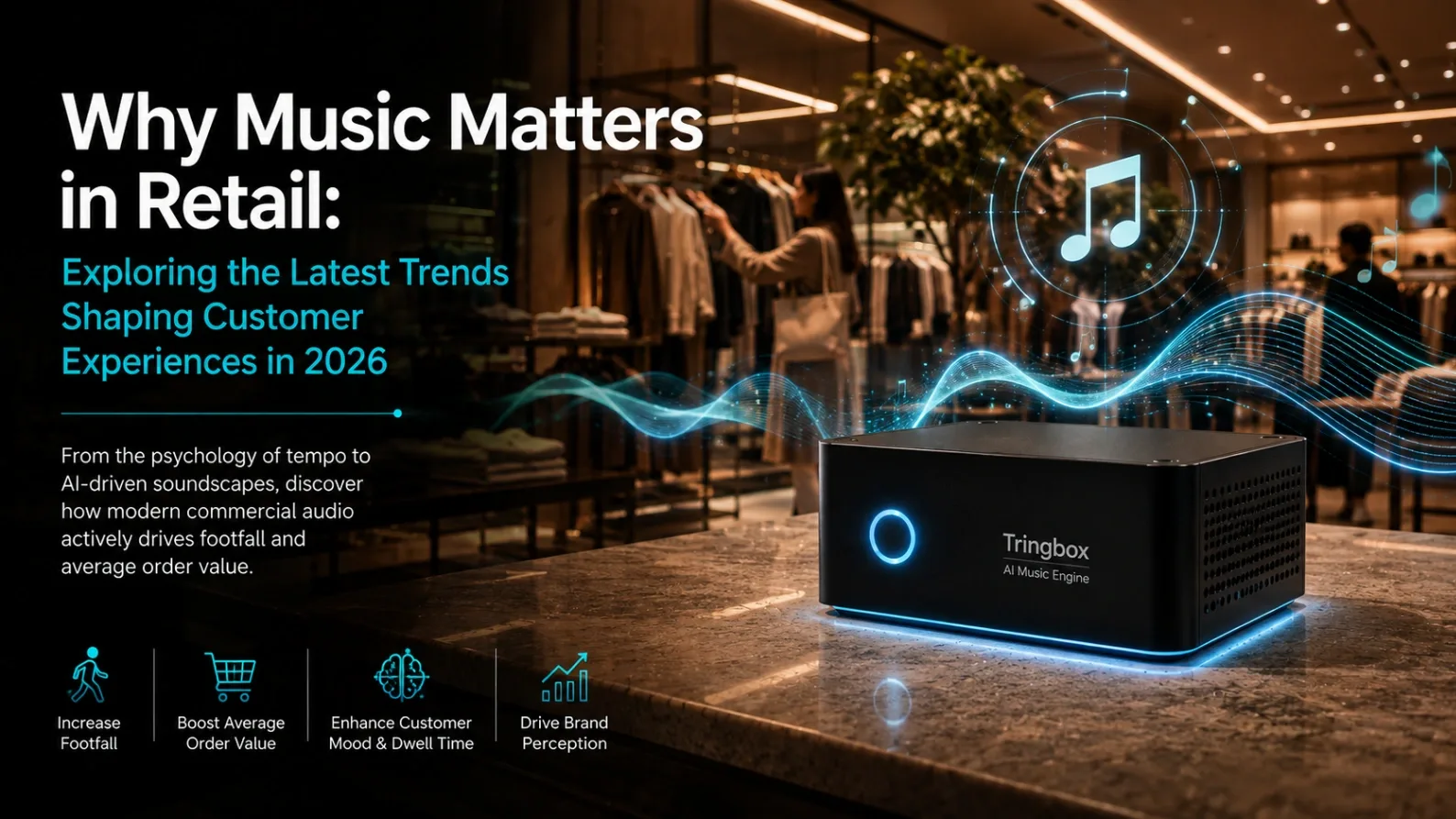
In the fiercely competitive physical retail landscape of 2026, aesthetics and visual merchandising are no longer enough to guarantee customer loyalty. The true battleground is sensory immersion. Audio branding has emerged as one of the most powerful, invisible operational levers available to modern brands. Walk into any successful commercial space, and the background music is not an accident it is a meticulously engineered soundscape designed to shape your emotional state and purchasing behavior. Research reveals that music influences consumer choice up to 50% of the time when deciding where to shop or eat. As the
in-store music market rapidly expands projected at a 15.8% compound annual growth rate through 2032 the industry is witnessing a massive shift. Retailers are abandoning generic, illegal consumer playlists in favor of dynamic, AI-optimized audio. This guide explores the fascinating psychology behind retail music trends and highlights how adopting advanced B2B platforms like
Tringbox and Songbox allows brands to legally and seamlessly monetize their atmosphere.
1. The Psychology of Tempo and Familiarity
The 72BPM Neuro-Hack: The speed of music directly dictates the physical pace of the shopper. Slow-paced music subconsciously relaxes customers, causing them to stroll leisurely and browse longer [1.1.1]. In a classic retail experiment, switching from fast to slow background music triggered a near 38% increase in sales because customers spent significantly more time interacting with products.
The Familiarity Paradox: Counterintuitively, playing top-40 pop hits can actually work against a retailer. Familiar songs can make time feel like it is dragging, while unfamiliar, highly curated music fades into the background and keeps shoppers relaxed. Field studies indicate that playing unfamiliar, brand-aligned music can boost sales by up to 9% compared to stores playing highly recognizable chart-toppers.
Volume and Density: Volume is equally critical. Loud, high-density tracks elevate the heart rate, making them ideal for high-turnover fast-fashion outlets or energetic cafes. Conversely, softer, minimalist audio works perfectly in luxury environments where the goal is to reduce cognitive load and invite consultative selling.
2. Emerging Retail Audio Trends in 2026
Dynamic Music Zoning: The era of the one-size-fits-all store playlist is over. Leading retailers are now utilizing 'music zoning' tailoring different acoustic profiles to different areas of the same store [1.1.1]. A department store might play energetic indie-pop in the youth apparel section while broadcasting relaxed, ambient textures in the high-end cosmetics zone, lifting sales across multiple demographics simultaneously.
Sensory Synergy: Audio is no longer siloed. A major trend in 2026 is the integration of comprehensive sensory marketing solutions. In-store music platforms are increasingly bundled with automated digital signage and scent marketing to create a multi-sensory brand experience. When the music perfectly aligns with the visual displays and the ambient fragrance, the brand identity becomes deeply immersive and highly memorable.
Real-Time AI Adaptation: The most significant technological leap is the integration of Machine Learning for personalized curation. Modern systems do not just play scheduled tracks; they analyze time of day, weather, and footfall data to generate dynamic soundscapes that adapt in real-time, matching the precise biological state of the crowd.
3. Tringbox AI: The Autonomous Sonic Architect
Zero-Touch Enterprise Ambience: For brands operating hundreds of locations, maintaining a flawless acoustic strategy is an administrative nightmare. Tringbox AI solves this by acting as an autonomous operating system. It utilizes Agentic AI to map the store's energy and automatically scales tempos and genres without requiring any manual curation or playlist scheduling from the floor staff. Built for Compliance: As copyright enforcement tightens globally, Tringbox acts as an impenetrable legal shield. It provides a massive, fully B2B-cleared commercial catalog, ensuring that enterprise brands can utilize advanced psychoacoustic strategies without the looming threat of devastating PPL and IPRS copyright fines.
Unbreakable Edge-Caching: Retail environments demand 100% uptime. Tringbox utilizes robust edge-caching hardware that downloads hours of dynamic audio directly to a local node. If a store experiences a total broadband outage, the high-fidelity ambient music continues to play flawlessly, protecting the customer experience from jarring interruptions.
4. Songbox Music: Tactical Crowd Ownership
The Power of Human Curation: While autonomous AI scales beautifully for retail chains, highly dynamic hospitality environments like bustling pubs, sports bars, and independent cafes often demand the intuition of a live human operator.
Live Vibe Shifts: Songbox Music empowers local floor managers to act as invisible DJs. When a sudden, celebratory crowd enters the venue, staff can use the intuitive Songbox interface to instantly pivot the room's energy to a high-BPM commercial profile, actively holding the crowd's attention and driving point-of-sale beverage revenue.
Safety Within Boundaries: Songbox provides this immense tactical agility while keeping the venue legally secure. Floor managers have the freedom to read the room and adjust the vibe, but they are strictly locked within a brand-approved, fully licensed commercial catalog, ensuring corporate peace of mind.
5. The True ROI of Acoustic Branding
Protecting the Real Estate Investment: The return on intelligent commercial audio is measured in increased dwell time, elevated perceived value, and elite brand recall. A poor, unmanaged audio experience quietly weakens the massive capital spent on physical interiors and visual merchandising.
Fostering Emotional Connection: Sound possesses the unique psychological ability to stir emotion in a matter of seconds. A carefully curated audio experience fosters feelings of comfort, trust, or excitement, which are essential for driving long-term customer loyalty in physical commercial environments.
Future-Proofing Your Brand: As e-commerce continues to dominate transactional shopping, the physical store must evolve into a theatrical, sensory-rich destination. Brands that invest in sophisticated, licensed B2B acoustic infrastructure are not just playing music they are actively engineering a superior, highly profitable consumer reality.
7. Frequently Asked Questions (Q&A)
Q: Why does slower music increase retail sales?
A: Slow-paced music subconsciously relaxes the human nervous system, causing shoppers to walk more leisurely. This extended dwell time naturally leads to deeper product engagement and a higher likelihood of impulse purchases.
Q: Is it true that unfamiliar music works better than popular chart-toppers?
A: Yes, in many retail contexts. Highly familiar hit songs can cause shoppers to track the passage of time, making their visit feel longer than it is. Unfamiliar, curated music fades into a pleasant background, keeping customers relaxed and encouraging them to browse up to 9% longer.
Q: Why can't I just use a consumer streaming app like Spotify to play music in my store?
A: Consumer streaming platforms strictly prohibit commercial use in their terms of service. Playing them in a public business setting constitutes copyright infringement, which exposes your venue to severe statutory fines from performing rights organizations.
Q: Disclaimer:
This blog is general marketing content and not legal advice. Music licensing obligations can vary significantly by repertoire, rights owner, exact usage type, physical location, and specific contract. Brands should always rely on their commercial agreements and professional legal counsel for final compliance decisions.
Conclusion
The Final Note
The role of background music in retail has transformed from a mere afterthought into a critical, highly strategic component of the customer journey. In 2026, the brands winning the physical retail battle are those who understand that audio branding is an active psychological lever. Whether it is utilizing slow-tempo acoustics to increase dwell time, deploying unfamiliar tracks to enhance relaxation, or utilizing dynamic 'music zoning' to cater to different demographics simultaneously, the science of sound is undeniable. However, capturing this acoustic power requires abandoning illegal, unmanaged consumer playlists. By transitioning to a dedicated, officially licensed B2B platform be it the zero-friction autonomous intelligence of Tringbox AI or the tactical, agile interface of Songbox Music retailers can perfectly synchronize their sensory environments, completely shield themselves from copyright liability, and ensure their physical spaces remain deeply memorable destinations.