
Why Traditional Wired Audio Setups Are Holding Back Your Exhibition Booth

Discover how ditching cables for modern wireless audio architecture can drastically reduce setup time, lower labor costs, and elevate your booth's visual appeal.

A
Arjun Varadaraj
Soundscape Strategist

Published

Aug 5, 2026

Read Time

12 min read
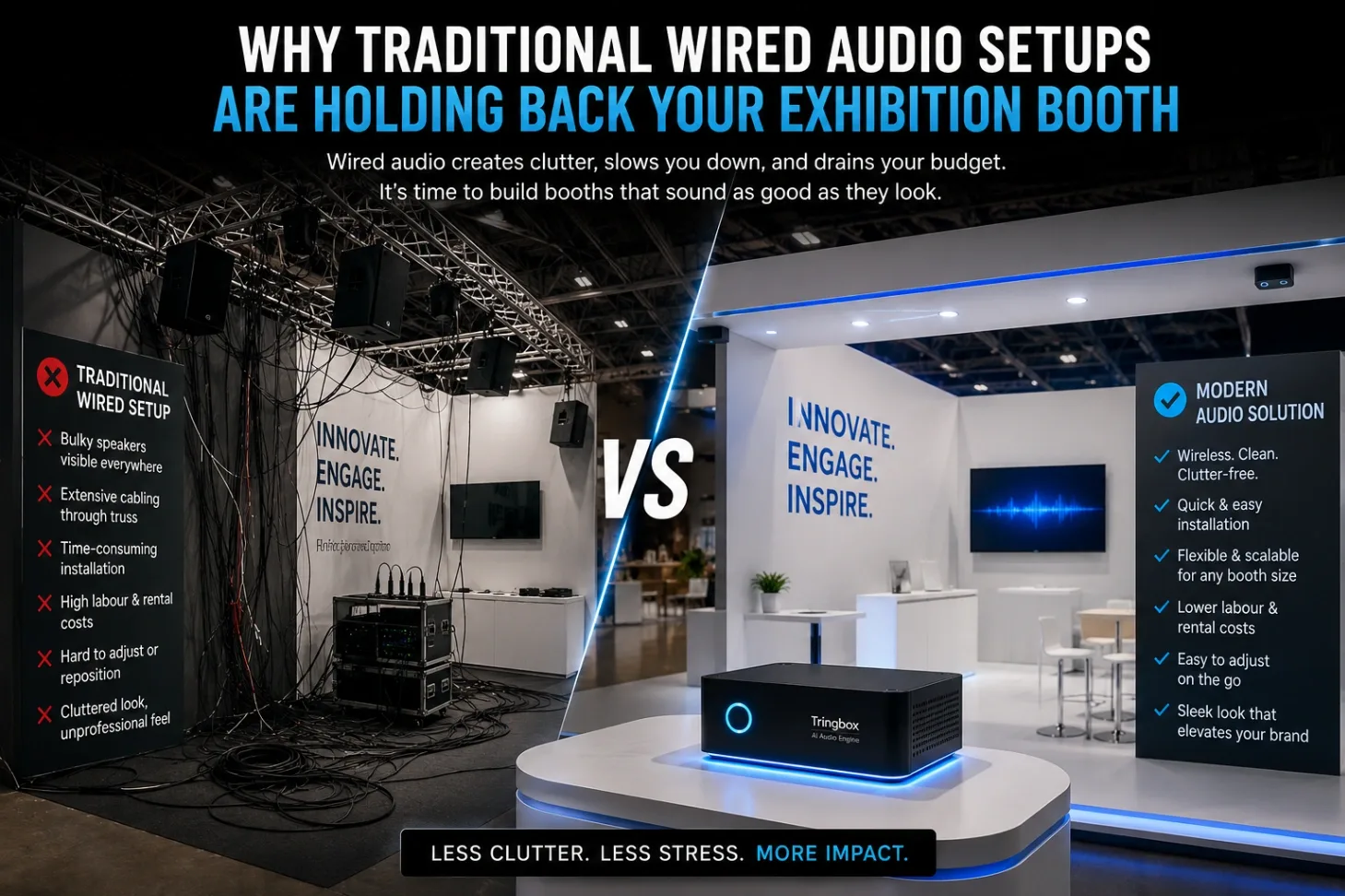
A minimalist poster design contrasting a tangled mess of audio cables with a sleek, glowing wireless symbol.
A booth designed to look effortless rarely gets built that way. The visual concept comes together first, and then come the bulky speakers, the cable runs through the truss, and the audio setup that slows everything down and clutters the look exhibitors worked hard to create. Traditional wired audio systems aren't built for fast, efficient booth setups. Extensive cabling through truss structures makes installation time-consuming, costly to rent, and difficult to adjust. Instead of focusing on engaging visitors, exhibitors end up troubleshooting their audio. Costs keep adding up through extra labour, cable management, and last-minute fixes, and once the doors open, repositioning a speaker for better coverage usually isn't an option without redoing the entire setup. In the high-stakes environment of a 2026 trade show, relying on rigid wired infrastructure is actively holding back your commercial potential. This analysis breaks down the true cost of wired setups and explores why migrating to a smart, wireless B2B platform like Tringbox is essential for a flawless exhibition experience.

1. The Aesthetic Clutter of Wired Systems

Shattering the Visual Illusion: Modern exhibition booths are heavily designed to offer a seamless, immersive brand experience. When thick, black audio cables are awkwardly zip-tied to lighting trusses or taped across the floor, it instantly cheapens the premium aesthetic. Without cables snaking across the floor, your venue looks neat and safe, which is crucial for events where aesthetics matter deeply.
Tripping Hazards and Compliance: Beyond visual clutter, loose cables are a significant liability. Taping down wires on the exhibition floor creates ugly, sticky residue and constant tripping hazards for attendees, often running afoul of strict venue health and safety compliance regulations.
The Clean Wireless Alternative: Wireless audio solutions allow for a completely clean aesthetic where speakers can be strategically placed or mounted without the structural commitment of a wired installation.

2. The True Cost of Installation and Labor

Expensive Upfront Infrastructure: Running speaker cables neatly across a booth takes meticulous planning, and the necessary amplifiers and AV receivers drastically increase the upfront rental cost. Exhibitors are forced to pay premium hourly rates for specialized AV labor just to run cable routes.
Slow Setup and Breakdown: Time is money on the exhibition floor. Wireless systems are designed for extreme efficiency, allowing teams to save massive amounts of time during both setup and pack-down. By eliminating the need to run complex cabling, businesses reduce installation costs and free up their staff to focus on actual event strategy.
Troubleshooting Friction: If a single cable is crimped or fails in a wired setup, diagnosing the issue requires tracing the line through the entire truss structure, completely stalling the booth's final preparation.

3. The Rigidity of Wired Audio

Zero Repositioning Agility: Trade shows are unpredictable. You may realize on day one that the ambient noise from a neighboring booth requires you to move your speakers closer to your meeting tables. With a traditional wired setup, moving a speaker requires tearing down the truss and running new cables. It is entirely rigid.
The Freedom of Movement: Wireless systems offer unparalleled flexibility, allowing organizers to easily move equipment to adapt to rapidly changing layouts or crowd dynamics. Speakers and brand representatives can roam freely and engage with guests, creating a far more lively and dynamic atmosphere.
Scalability on the Fly: If your booth suddenly needs expanded audio coverage, a wireless system is highly scalable; you can easily accommodate additional speakers without requiring a complete overhaul of the existing infrastructure.

4. Tringbox AI: Smart, Frictionless Booth Audio

Software over Hardware: Modern B2B audio solutions are leaving bulky hardware behind. Tringbox operates without dedicated hardware lock-in, meaning clients can use web, mobile, or tablet interfaces, keeping rollout friction incredibly low [1.2.2]. This makes it the perfect, lightweight engine for temporary exhibition booths.
AI-Driven Atmospheric Intelligence: Tringbox is not just a wireless player; it is an ambient intelligence platform. The system utilizes AI to adapt the background music based on the live context, time of day, and footfall mood, rather than just looping a generic playlist. If the exhibition floor gets loud and chaotic, the AI dynamically adjusts the acoustic profile to keep attendees engaged.
Absolute Legal Compliance: Exhibitors often make the fatal mistake of playing consumer apps like Spotify at their booths, risking severe PRO fines. Tringbox provides a fully managed, commercially cleared library that shapes the customer experience legally.

5. Frequently Asked Questions (Q&A)

Q: Are wireless speakers reliable enough for a busy trade show floor in 2026?

A: Yes. Modern wireless multi-room audio systems leverage powerful mesh networking and improved WiFi protocols to deliver a highly robust, interruption-free listening experience [1.1.2]. They provide professional sound quality that fills the room without interference or dropouts.
Q: Why does wired audio increase the cost of my booth?

A: Wired systems require extensive AV labor to string and hide cables through trusses, driving up setup time and installation costs. They also require heavier, more expensive amplifiers and AV receivers upfront.
Q: Can I just play a YouTube playlist on a Bluetooth speaker at my booth?

A: No. Playing consumer apps like YouTube or Spotify in a public exhibition space violates copyright law. You need a B2B-licensed platform like Tringbox to ensure your background audio is fully legal for commercial public performance.
Q: Disclaimer:

This blog is general marketing content and not legal advice. Music licensing obligations can vary significantly by repertoire, rights owner, exact usage type, physical location, and specific contract. Brands should always rely on their commercial agreements and professional legal counsel for final compliance decisions.
Conclusion

The Final Note

The visual impact of an exhibition booth is only as strong as its weakest sensory element. While you may invest heavily in LED walls and architectural design, relying on traditional, wired audio setups introduces severe operational drag. The aesthetic clutter of cables, the inflated labor costs, and the absolute rigidity of a wired infrastructure act as direct barriers to a seamless brand experience. By transitioning to a smart, wireless ecosystem, exhibitors reclaim their setup time and maintain a pristine, hazard-free environment. When paired with an intelligent B2B audio platform like Tringbox, your booth’s acoustics become an autonomous, revenue-driving asset that legally and dynamically adapts to the chaotic energy of the trade show floor. In 2026, cutting the cord isn't just a technological upgrade; it's a strategic imperative for exhibition success.