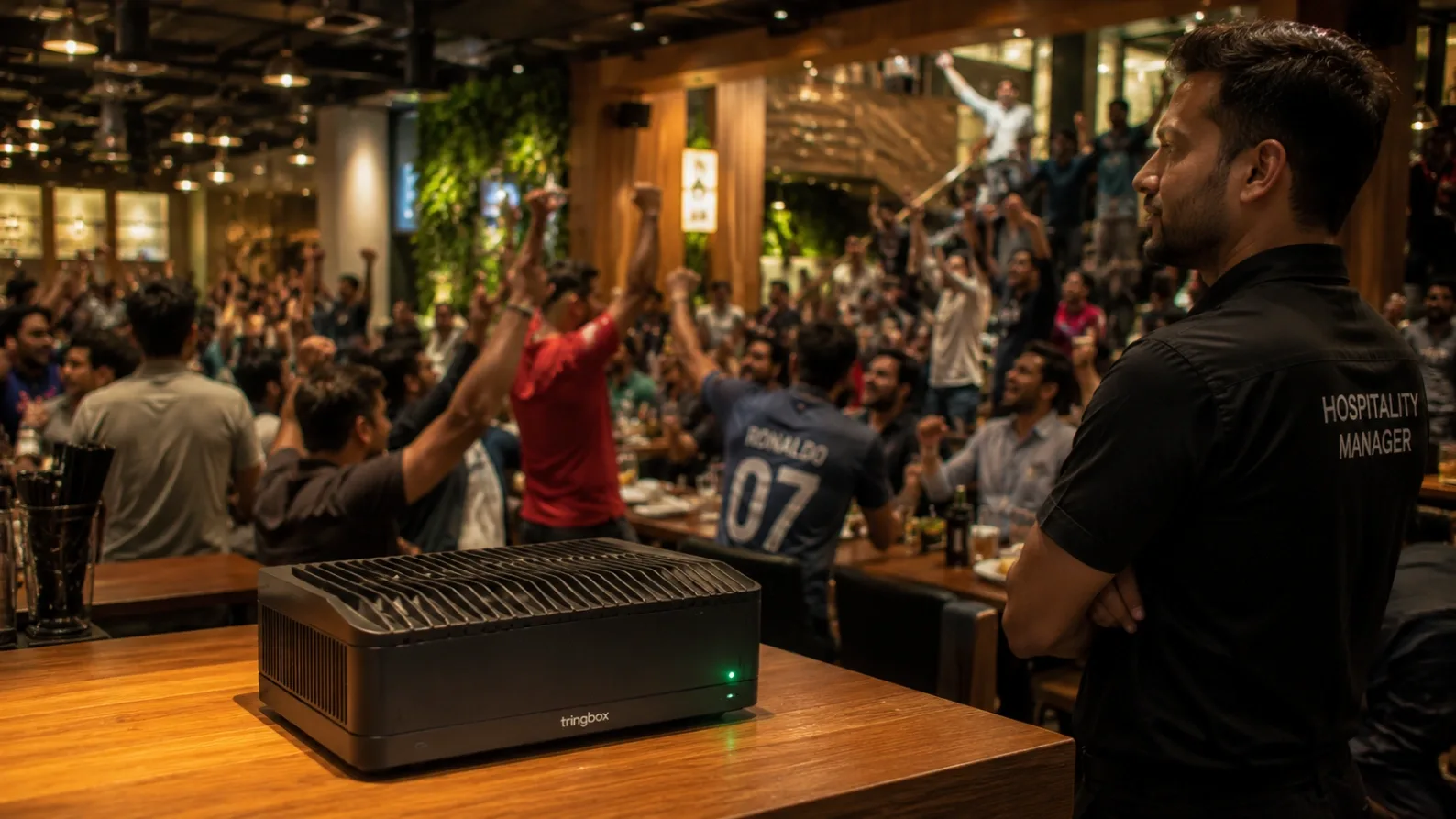
The 2026 FIFA World Cup has just concluded with an unforgettable finale, as Spain secured a dramatic victory over Argentina to cement the tournament's status as the most culturally and economically significant sporting event of the decade. While millions watched the broadcast from New Jersey, a massive secondary phenomenon occurred globally: an unpredictable, seismic surge of consumer footfall across commercial retail spaces, shopping malls, and hospitality venues. For enterprise operations teams and independent venue managers alike, major global sporting events create an extreme operational stress test. The 'World Cup Effect' drives unprecedented crowds into physical spaces, creating a highly lucrative but incredibly volatile commercial environment. Managing the physical ambience during these global events is no longer about simply turning up the volume on a television screen; it requires sophisticated, legally compliant acoustic engineering to monetize the rapidly shifting emotional energy of the crowd. When a home team scores, the physical venue must react. When a tense penalty shootout begins, the sensory environment must adapt to hold customer attention and drive high-margin beverage and retail sales. This objective exploration delves into how the modern commercial ecosystem utilizes advanced B2B audio platforms to synchronize in-store environments with global sporting events. By comparing the autonomous, scheduled intelligence of platforms like Soundtrack Your Brand and
Tringbox AI against the tactical, live human curation of Songbox Music, we uncover how brands successfully engineered their acoustic atmospheres to capture the unparalleled commercial energy of the 2026 FIFA World Cup.
1. The Economics of the 'World Cup Effect' in Physical Retail
The Footfall Volatility Challenge: Mega-sporting events like the FIFA World Cup create extreme, localized volatility in consumer footfall. A standard Tuesday afternoon in a shopping mall might suddenly experience a 300% surge in traffic as fans congregate around central atrium screens or flood into adjoining sports bars and casual dining restaurants. This sudden influx completely alters the acoustic and psychological baseline of the commercial space. If the retail environment maintains its standard, low-tempo Tuesday background music, the resulting emotional disconnect feels jarring and inauthentic. Modern commercial operators understand that sensory alignment matching the ambient music tempo to the elevated heart rates of a highly stimulated, sports-focused crowd is a fundamental driver of extended customer dwell time and significantly increased average order value.
Monetizing the Emotional Highs and Lows: Live sports are inherently emotional, and the commercial objective of any physical venue is to seamlessly monetize those emotional peaks and valleys. When a high-stakes match reaches a fever pitch, the venue's acoustic architecture must elevate to match that intensity, utilizing the Lombard effect to naturally encourage a louder, more celebratory atmosphere that directly correlates with increased impulse purchasing and beverage consumption. Conversely, when a match ends in a devastating defeat, the venue must skillfully de-escalate the room's energy to prevent aggressive behavior while still encouraging patrons to stay and commiserate. This delicate psychological balancing act cannot be achieved with a generic, unmanaged consumer playlist; it requires a dedicated, commercially licensed B2B acoustic strategy.
The Halo Effect on Adjacent Retailers: The commercial impact of the 'World Cup Effect' is not limited exclusively to sports bars and pubs. Adjacent retail spaces such as fashion boutiques, electronics showrooms, and grocery outlets located within the same mall complex experience a massive secondary halo effect. As fans spill out from designated viewing areas during halftime or after the final whistle, these adjacent retailers possess a brief, critical window to capture their attention. By deploying upbeat, celebratory, and culturally relevant acoustic profiles, these retailers can essentially 'hijack' the lingering positive emotional energy of the sporting event, drawing highly energized consumers into their stores and significantly boosting point-of-sale conversion rates during unexpected operational windows.
2. The Failure of Static Playlists During Live Events
The Unpredictability of Live Sports: The fundamental flaw of traditional, static retail playlists is their complete inability to react to the inherent unpredictability of live sports. A corporate marketing team may schedule an upbeat 'Victory Playlist' to trigger precisely at 10:00 PM, assuming a match will conclude smoothly in regular time. However, as witnessed during the intense 2026 World Cup knockout stages where multiple fixtures extended into deep extra time and sudden-death shootouts rigid schedules fail catastrophically. If the ambient music suddenly shifts to upbeat pop music while the crowd is in the middle of a nail-biting, silent penalty shootout, the venue instantly loses its atmospheric credibility and shatters the customer's emotional immersion.
The Danger of Unmanaged Consumer Audio: In a desperate attempt to react quickly to live events, poorly trained floor staff often make the critical error of overriding the corporate sound system with their personal smartphones, playing unlicensed tracks from YouTube or Apple Music to hype up the crowd. This rogue action instantly exposes the venue to severe legal liabilities. Copyright enforcement agencies actively monitor commercial spaces during high-profile international events, knowing perfectly well that venues are highly prone to broadcasting unlicensed audio and video. Relying on staff to act as amateur DJs using consumer apps is a direct violation of international public performance laws and can result in crippling statutory fines.
The Need for Agile Commercial Solutions: To solve this complex operational dilemma, venues must deploy acoustic software that bridges the gap between strict legal commercial compliance and live, on-the-floor agility. The underlying system must possess the capability to override scheduled corporate guidelines during designated 'Event Modes,' while strictly limiting the audio selection to fully licensed, B2B-cleared commercial catalogs. This guarantees that the venue can dynamically react to the live sports environment without ever compromising the brand's legal safety or facing unannounced copyright audits from performing rights organizations.
3. Autonomous Event Scheduling: Soundtrack Your Brand & Tringbox AI
Pre-Programmed Strategic Guardrails: For massive enterprise retail chains and sprawling shopping malls, relying on individual store managers to manually adjust the music during a sporting event is an operational nightmare that leads to severe brand inconsistency. Platforms like Soundtrack Your Brand excel in these large-scale environments by allowing central marketing teams to meticulously pre-program event-specific acoustic schedules weeks in advance. A corporate director can design a custom 'World Cup Matchday' acoustic profile and schedule it to deploy autonomously across hundreds of global locations precisely an hour before kickoff, ensuring absolute brand consistency without requiring a single moment of local staff intervention.
Tringbox AI and Agentic Ambience: Taking automation a step further into the future, Tringbox AI treats event audio as a dynamic, autonomous operating system. Instead of relying purely on rigid clock-based schedules, Tringbox utilizes advanced Agentic AI to constantly monitor the 'living mood' of the physical space. By establishing specific time-blocks and energy parameters around major tournament fixtures, the AI can seamlessly transition the store's ambience from a relaxed morning flow into a high-BPM, high-energy environment as the match approaches. If the venue experiences a sudden, unpredicted surge in footfall related to the game, Tringbox's underlying algorithmic intelligence automatically scales the tempo to match the increased crowd density without any human prompting. Protecting Uptime During Peak Traffic: One of the most critical, yet overlooked, features of autonomous platforms like Tringbox is their heavy reliance on edge-caching hardware. During massive global events, local cellular networks and public mall Wi-Fi infrastructures frequently collapse under the immense data strain of thousands of fans streaming video content simultaneously. If a venue relies on a constant, live internet connection for its background music, it will inevitably face awkward, deafening silences when the network fails. Edge-caching ensures that the venue's celebratory event audio continues to play flawlessly from the local hardware node, guaranteeing 100% acoustic uptime when the commercial stakes are at their absolute highest.
4. Live Human Curation: The Songbox Music Advantage
The Necessity of the Human Touch: While AI and centralized corporate scheduling are perfect for massive retail chains, the hospitality sector requires a vastly different operational philosophy. In independent sports bars, bustling pubs, and high-energy designated fanzones, the atmosphere is incredibly raw, visceral, and highly reactive. An algorithm cannot feel the devastating, stunned silence of a missed penalty, nor can it anticipate the eruptive, chaotic joy of a last-minute Spanish winning goal. This is exactly where Songbox Music provides an unparalleled commercial advantage. Built on the core operational philosophy to 'Control the Sound, Own the Crowd,' Songbox explicitly rejects total automation in favor of empowering the human floor manager.
Tactical Crowd Control in Real-Time: Songbox operates as an agile, legally cleared commercial toolkit specifically designed for instantaneous reaction. When a major match event occurs, the local venue manager can use the highly intuitive Songbox interface to instantly pivot the entire room's energy. If the home team scores, the manager can trigger a pre-approved, high-energy celebratory anthem with a single tap. If the match becomes tense and highly strategic, the staff can subtly lower the BPM to maintain a comfortable background hum that does not distract from the screen. This elite level of hyper-localized, human-driven tactical crowd control is fundamentally impossible to replicate with a centralized corporate algorithm.
Merging Safety with Absolute Spontaneity: The brilliant architectural balance of the Songbox model is that it allows for total live spontaneity without ever sacrificing legal brand safety. The floor staff are given the tactical freedom to act as invisible DJs, but they are strictly confined to a massive catalog of commercially licensed, B2B-cleared tracks. A stressed bartender cannot accidentally play an explicit, offensive, or unlicensed track from a personal streaming device. This empowers the venue to deliver an incredibly authentic, highly reactive sports viewing experience while keeping the finance and legal teams completely insulated from copyright infringement risks.
5. The Future of Event-Driven Commercial Experiences
Phygital Integration of Audio and Visuals: As we look beyond the 2026 World Cup, the integration of commercial audio with digital signage and broadcast rights will become exponentially tighter. Venues are rapidly adopting advanced AV systems that automatically synchronize their ambient lighting and overhead B2B music perfectly with the live broadcast feed of the match. When the final whistle blows, the visual screens instantly transition to targeted retail promotions while the acoustic system seamlessly takes over the room's audio with high-energy commercial tracks, creating a unified, immersive 'phygital' sensory experience designed to maximize post-match consumer spending.
The Demands of the Omniconsumer: The modern 'omniconsumer' demands significantly more than just a large screen to watch the game; they demand a fully realized, theatrical, community environment. Commercial spaces that treat their acoustic ambience as an afterthought will rapidly lose footfall to sophisticated competitors who understand exactly how to engineer a compelling emotional atmosphere. Background music is no longer a passive utility; it is an active, highly potent revenue-generating instrument that must be tuned precisely to the massive cultural and sporting events that dominate the global conversation.
Selecting the Right Acoustic Engine: Ultimately, successfully capitalizing on the 'World Cup Effect' requires selecting the specific acoustic technology that perfectly matches your venue's operational reality. If your brand demands absolute, zero-friction consistency and automated legal compliance across a vast, continent-spanning corporate network, autonomous platforms like Tringbox AI and Soundtrack Your Brand are essential. However, if your business model relies heavily on the raw, unpredictable energy of live sports fans and the intuitive, tactical crowd-control skills of your local hospitality staff, a human-curation platform like Songbox Music is the definitive, unbeatable choice. By actively aligning your acoustic infrastructure with your operational goals, your commercial space will always be fully prepared for kickoff.
Conclusion
The Final Note
The 2026 FIFA World Cup definitively proved that global sporting events are no longer just television spectacles; they are massive, physical retail phenomena that dictate the flow of consumer capital. The commercial spaces that generated the highest return on investment during the tournament were those that completely integrated their sensory environments with the emotional volatility of the fans. Moving forward, relying on illegal consumer apps or static, unresponsive playlists is a recipe for operational failure. The definitive choice between the autonomous, scale-driven brilliance of Tringbox AI and the agile, human-centric crowd control of Songbox Music depends entirely on your brand's philosophy. By treating commercial ambience as a highly engineered, legally compliant digital asset, retailers and hospitality leaders can ensure they capture the full financial potential of the 'World Cup Effect' turning passive spectators into highly engaged, high-spending customers.